Walk into any elementary classroom, and you’ll likely see colorful displays, bulletin boards, and carefully coordinated decor. While a beautiful classroom creates an inviting environment, the most effective classroom decor serves a purpose beyond simply looking good.
Functional classroom decor is everyday decor that doubles as a teaching tool—it can support instruction, increase student independence, and make classroom management more efficient.
If you’re looking for ways to create a classroom that is both beautiful and meaningful, here are three functional classroom decor ideas—instructional tools that double as decor while actively supporting student learning.
Turn Your Writing Wall Into a Classroom Management Tool
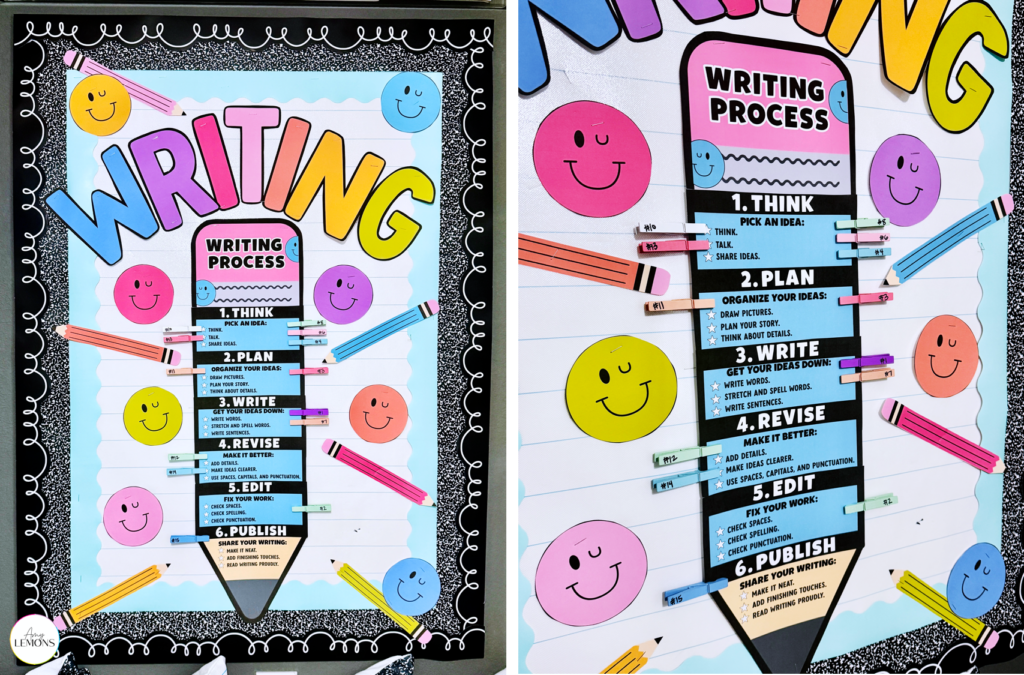
A writing process display is much more than a cute bulletin board. It can become a powerful classroom management system that helps students take ownership of their writing while giving teachers valuable information at a glance.
Instead of displaying a static poster, assign each student a numbered clothespin. As students work through the writing process, they simply move their clothespin to the stage they are currently working on: think, plan, write, revise, edit, or publish.
This simple system allows teachers to quickly monitor student progress without interrupting instruction. Need to see who is ready for conferencing? A quick glance at the board tells you exactly who is revising or editing.
You’ll also be able to identify students who may be stuck in one stage and need additional support.
Not only does this system encourage student independence, but it also transforms your writing bulletin board into an interactive instructional tool that students use every day.
Quick Tip: Use numbered clothespins rather than student names so the system can easily be reused year after year.
Create an Anchor Chart Area That Students Actually Use
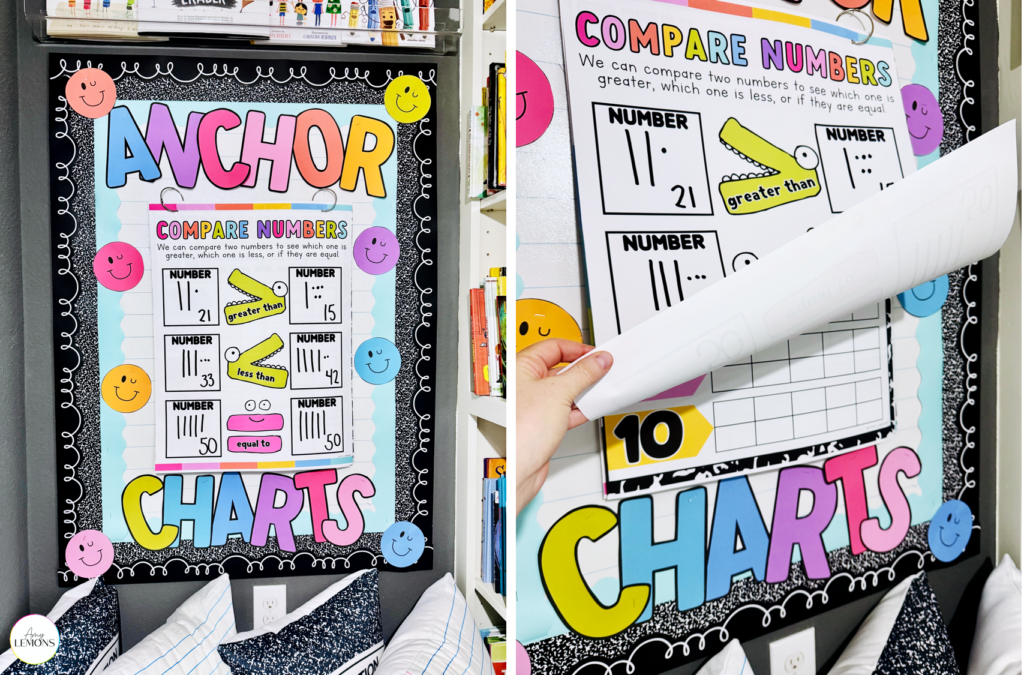
Anchor charts are one of the most powerful instructional tools in the elementary classroom, but only when they are created with students rather than simply displayed for students.
An anchor chart is a living record of learning that is built alongside students during instruction. An anchor chart is not a pre-made poster that hangs on the wall and is never referenced again.
When introducing a new skill, start with an anchor chart template and invite students to help fill in examples, strategies, vocabulary, and key ideas. As students contribute to the chart, they develop ownership of the learning and are more likely to reference it independently later.
In your classroom, you might want to designate a specific area for anchor charts so students always know where to find support.
During math lessons, students can help complete collaborative anchor charts together. They then create a smaller version or handout to glue into their math journals, providing them with a personal reference tool they can use throughout the year.
One of the best time-saving tips is to laminate your anchor chart templates. Teachers can write on laminated charts using dry-erase markers, wipe them clean, and reuse them year after year while still preserving the collaborative learning experience.
Quick Tip: Limit your displayed anchor charts to skills you are currently teaching. Too many charts on display at once can overwhelm students.
Organize Phonics Activities for Efficient Small Group Instruction
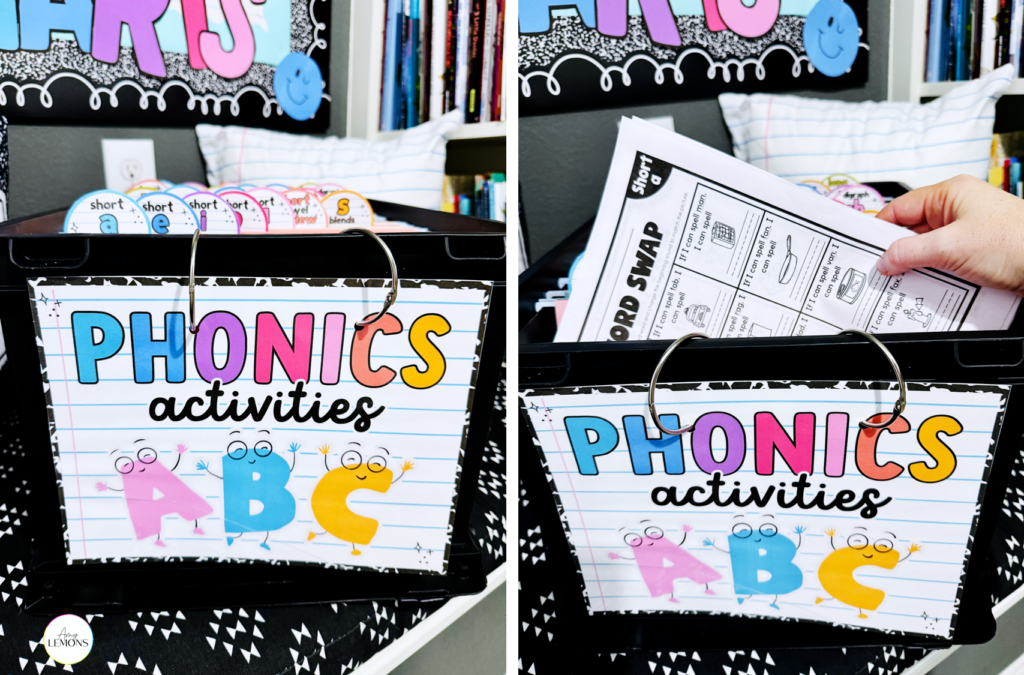
Effective small group instruction depends on having the right materials readily available. The last thing teachers need during intervention time is to spend valuable instructional minutes searching for activities.
A well-organized phonics system keeps instructional tools at your fingertips so you can quickly respond to student needs. By organizing activities by phonics skill or sound pattern, teachers can easily grab targeted materials for remediation, review, or enrichment.
Whether you’re teaching short vowels, blends, digraphs, vowel teams, or advanced phonics patterns, an organized system allows you to quickly differentiate instruction and maximize every minute of small group time.
Having activities organized and ready to go also reduces teacher stress. Instead of scrambling to find resources, you can focus your energy on what matters most: teaching students.
Check out three other favorite classroom organization systems that will save you time, too!
Quick Tip: Label folders or hanging files by phonics skill so you can quickly pull exactly what students need during intervention groups.
Beautiful Classroom Decor Can Be Functional Too
Classroom decor should do more than fill wall space. When thoughtfully designed, your classroom environment can become an active part of instruction, classroom management, and student learning.
By incorporating purposeful tools like interactive writing displays, collaborative anchor chart systems, and organized phonics resources, you can create a classroom that is both beautiful and highly functional.
After all, the best classroom decor isn’t just something students look at—it’s something they use.