
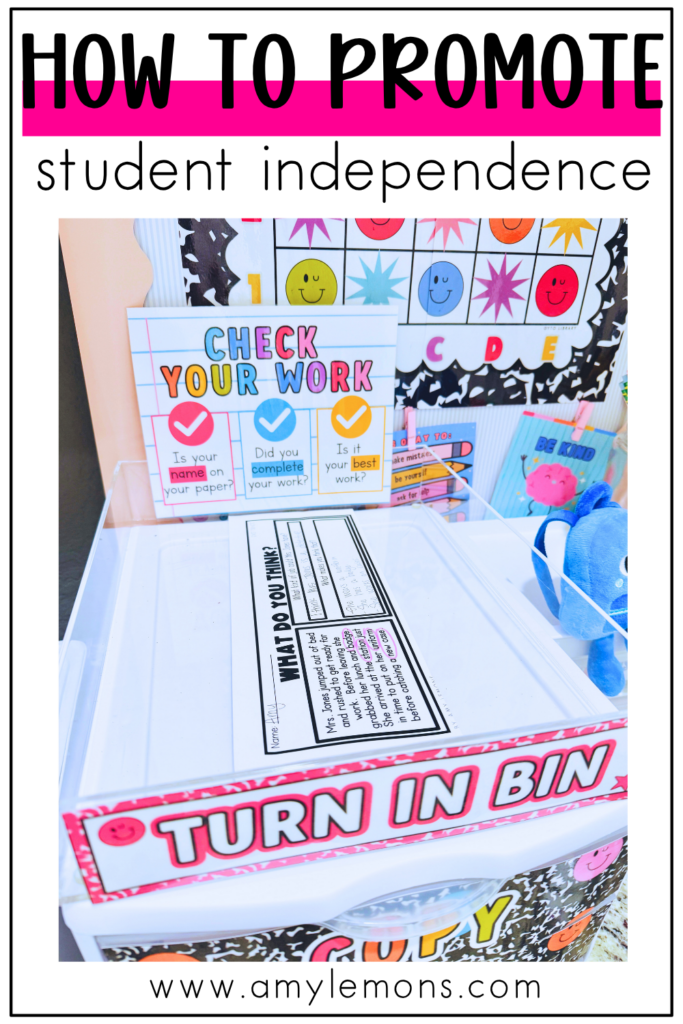
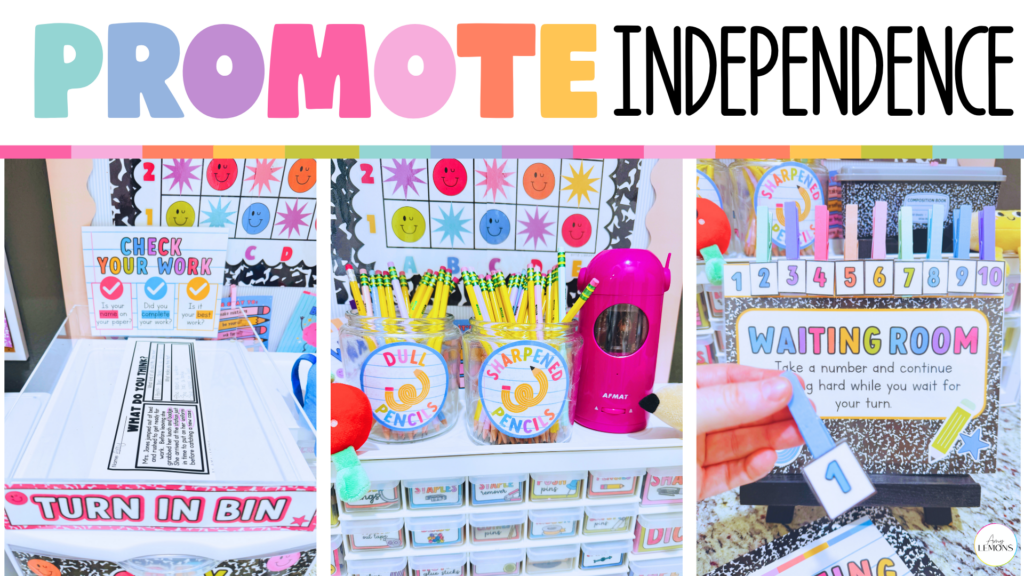
This past school year, I had the opportunity to substitute in classrooms across multiple grade levels. Every teacher had their own style, but one thing quickly stood out. The classrooms that ran the smoothest all had one thing in common: simple, well-established systems.
It wasn’t elaborate classroom management programs or expensive organizational tools. It was clear routines that students knew how to follow independently.
As a guest in those classrooms, I noticed something else. These classroom management systems didn’t just help the classroom teacher. They also made it easy for substitutes, interventionists, paraprofessionals, volunteers, and support staff to step in and help, as the expectations were clear for everyone.
The best classroom systems don’t rely on the teacher constantly giving directions. They empower students to solve everyday problems independently, resulting in fewer interruptions, smoother transitions, and more time for learning.
Today, I’m sharing three of my favorite systems that I saw repeatedly in well-run classrooms. They’re simple to implement, easy for students to learn, and make a noticeable difference in the daily flow of your classroom.
1. Classroom Turn In Bin Idea That Does More Than Collect
Turning in assignments seems simple enough, but without a clear routine, it often turns into forgotten names, incomplete work, and a line of students asking, “Am I done?”
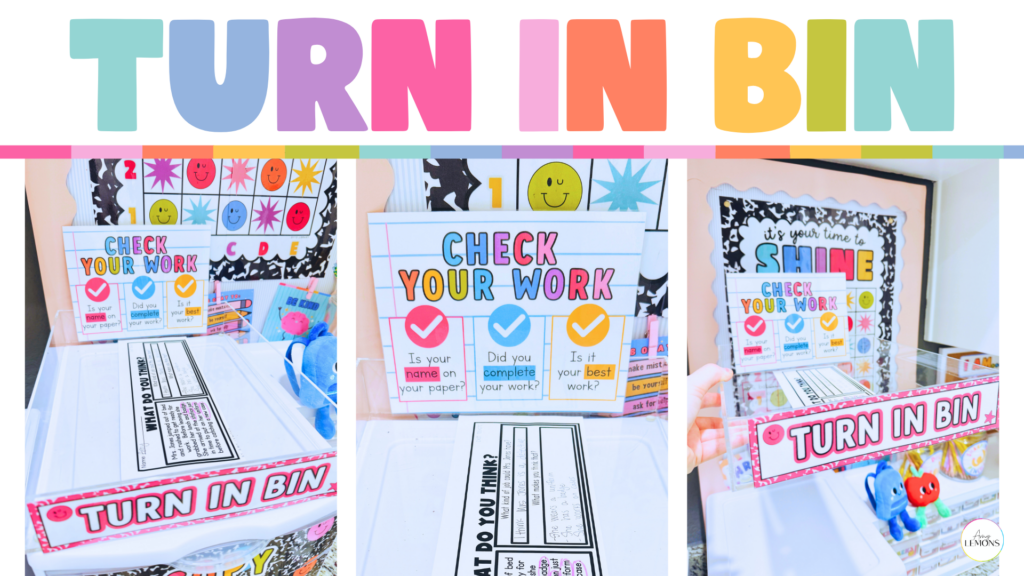
Instead of using a plain turn-in tray, create a designated Turn In Bin paired with a simple “Check Your Work” reminder. Before students place their paper in the bin, they pause and ask themselves three quick questions:
- Is my name on my paper?
- Did I complete my work?
- Is this my best work?
These quick reminders encourage students to take ownership of their work before handing it in. Rather than relying on the teacher to catch every missing name or unfinished problem, students begin checking their own work first.
This routine only takes a few seconds, but over time it dramatically reduces missing names, incomplete assignments, and unnecessary interruptions.
Teacher Tip: Introduce this routine during the first week of school and model it repeatedly. After a few weeks, students will naturally stop to check their work before submitting it.
Looking for more ways to keep student paperwork organized? I shared a similar filing system in this post on classroom organization systems that save time.
2. Create a Pencil Station System (and Stick to the Routine)
If there is one classroom supply that somehow causes endless interruptions, it’s pencils.
“My pencil broke.”
“I don’t have one.”
“I can’t find mine.”
“Can I sharpen this?”
Without a clear system, pencils become one of those tiny frustrations that steal instructional time all day long.
Instead, create a dedicated Pencil Station with one simple rule: students solve their own pencil problems.
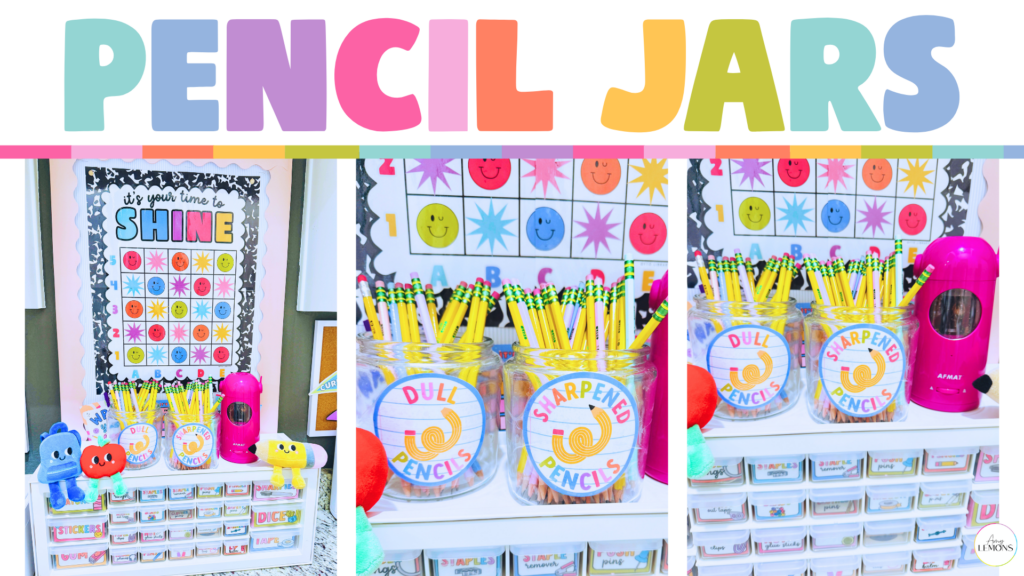
One of my favorite systems is using two labeled containers, one for Sharpened Pencils and one for Dull Pencils. If a student’s pencil breaks, they quietly place it in the dull container and grab a sharpened one. No asking. No waiting. No interruptions.
The key is consistency. Teach students exactly how the routine works and practice it until it becomes automatic.
And while we’re talking pencils, having a reliable sharpener makes a huge difference.
After trying several over the years, I keep coming back to my favorite classroom pencil sharpener because it’s fast, dependable, and holds up to daily classroom use.
A quality sharpener may seem like a small investment, but it’s one you’ll appreciate every single day.
Want to see how I organized the rest of my pencils and supplies? I walked through my whole labeled supply system in this post.
3. Create a “Waiting Room” System for Small Group Help
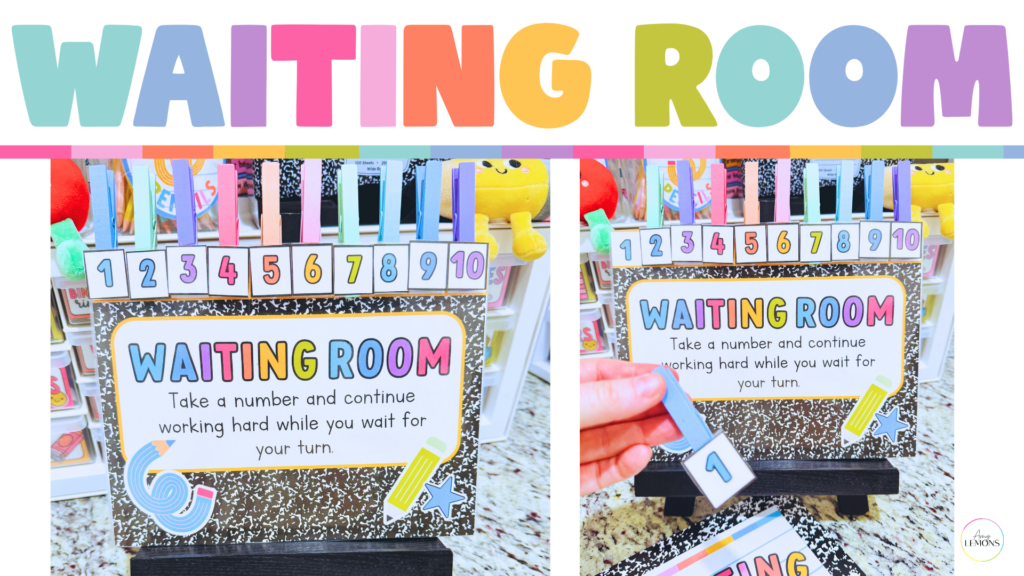
One of the hardest classroom management challenges is helping individual students without creating a line at your desk.
As soon as one student comes up with a question, several more follow. Before you know it, students are standing around waiting while the rest of the class becomes distracted.
A simple Waiting Room system solves this problem beautifully.
Instead of standing beside you, students take a numbered clothespin and clip it onto their shirt or work. Then they return to their seats and continue working while they wait for their turn.
As the teacher, you simply call students by number.
Students know they’ve been “checked in,” so they don’t feel the need to hover or repeatedly ask when you’ll help them. Even better, they stay engaged with independent work while they wait.
This small change creates a calmer classroom, reduces congestion around your teaching area, and allows you to give students your full attention without feeling rushed.
Teacher Tip: Teach students that the Waiting Room is for questions that truly require teacher assistance. Encourage them to reread directions, use classroom resources, or ask a table partner before joining the queue.
Why Classroom Systems Matter
When teachers think about classroom management, they often focus on rules and consequences. While those certainly have their place, strong classroom management begins with predictable systems.
Students thrive when expectations are clear. Instead of constantly relying on the teacher, they begin solving everyday problems independently. That independence builds confidence, reduces interruptions, and creates more time for meaningful instruction.
The goal isn’t simply having a quieter classroom. It’s creating an environment where students know what to do, take responsibility for their learning, and develop habits that will serve them all year long.
Build Independence One Routine at a Time
After spending a year in classrooms as a substitute, one lesson became incredibly clear: the classrooms that felt calm and organized weren’t necessarily the quietest or the fanciest. They were the ones where students knew exactly what to do.
Great classroom systems create consistency for everyone. They help students become more independent, give teachers fewer interruptions, and make it easy for substitutes, aides, interventionists, and volunteers to step into the classroom without wondering how things work.
Whether it’s a Turn In Bin that encourages students to check their work, a Pencil Station that eliminates constant interruptions, or a Waiting Room that keeps students learning while they wait for help, these simple systems can make your classroom run more smoothly from day one.
The goal isn’t perfection. It’s creating routines that become second nature so you can spend less time managing the little things and more time doing what matters most: teaching your students.

2 Responses
Hi! I am having trouble ordering the Composition Notebook label template for reading, writing, math, spanish, and science. Can you help me.
Thank you,
Elizabeth
Hi there! So sorry you’re having issues with the label. Here’s a direct link to the student journal labels: https://shop.getyourteachon.com/collections/your-gyto-classroom/products/gyto-classroom-decor-waiting-room-system-classroom-management-tool-bright-classroom-decor-copy