There was a time when classroom slides were mostly used for displaying a schedule or projecting directions. Helpful? Absolutely. But over time, one thing has become incredibly clear to me while spending time in classrooms and observing instruction:
The most effective slides are not just visual decorations for the classroom. They are systems.
When used intentionally, daily instructional slides can create consistency, reduce behaviors, streamline transitions, support differentiation, and maximize instructional time from the moment students walk in the door.
That is exactly why, over at The Library, these Daily Instructional Slides were created. These slides are designed to help teachers lead with clarity, consistency, and engagement all day long.
Inside each set, you’ll find:
- Daily morning slides
- Soft start or morning choice slides
- Grouping slides
- Sticky question slides
- Desk prep reminders
Every slide serves a purpose.
Because when students know what to do, where to go, and what they’re learning, behavior decreases and learning increases.
Start the Day With Purpose
The tone of a classroom starts before instruction ever begins.
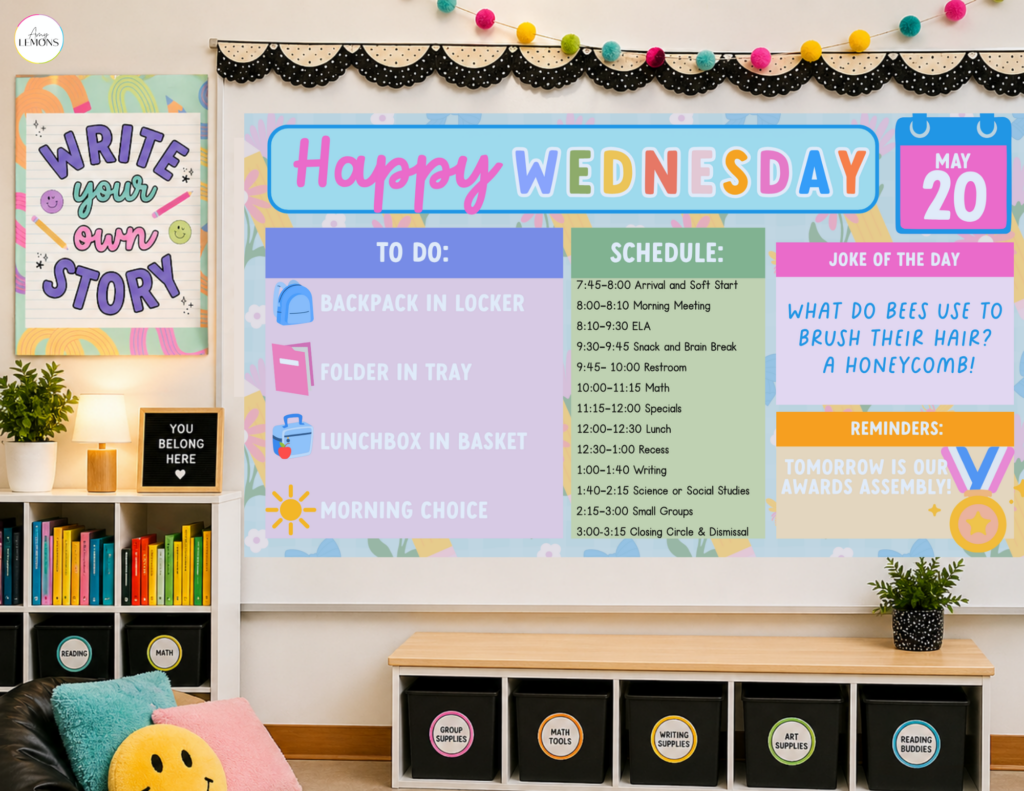
One of the biggest things consistently seen in strong classrooms is intentional structure during arrival time. Instead of chaotic mornings, repeated verbal reminders, or students wandering aimlessly, effective teachers use Morning Slides to create consistency and calm.
The goal is simple: Students walk in already knowing what to do.
Morning slides can:
- Display arrival expectations
- Show the schedule for the day
- Share reminders
- Build excitement with a joke, quote, fun fact, or challenge
They immediately reduce the number of directions teachers have to repeat while helping students settle into a predictable routine.
>>> Grab Your Free Daily Instructional Slides Here <<<
Soft Starts Change the Entire Feel of the Morning
One thing that becomes obvious in classrooms very quickly is this: How students start the day often impacts how the rest of the day goes.
And honestly, jumping immediately onto computers or academic work first thing in the morning can feel overwhelming for many students.
Even warm-ups or bell-ringers, while well-intentioned, can sometimes feel like an academic trigger the second students walk through the door, especially for those already dysregulated, anxious, tired, or overwhelmed.
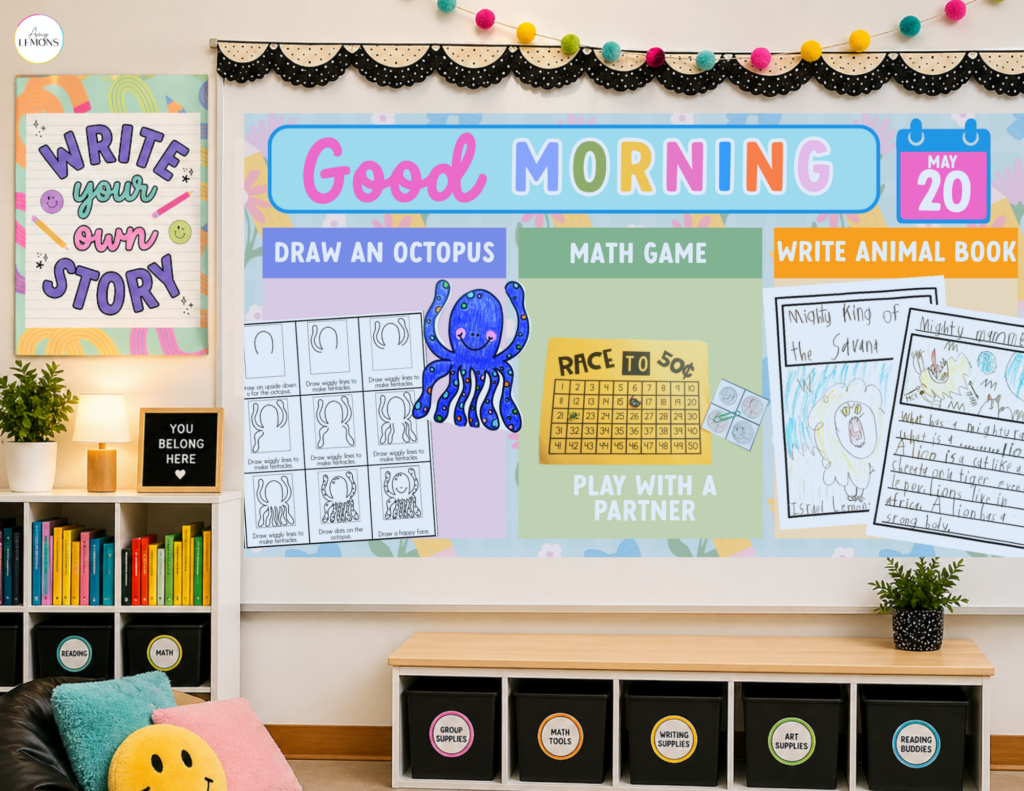
That is why Morning Choice Slides, or “Soft Starts,” can be such a powerful system.
Instead of assigning one task to every student, students choose from several engaging, low-pressure activities for the first few minutes of the day.
Some examples might include:
- Directed drawing
- Partner games
- Creative writing
- Puzzles
- Building challenges
- Conversation prompts
The goal is not busy work.
The goal is regulation, connection, and ownership.
Use Slides to Make Small Groups Smooth and Strategic
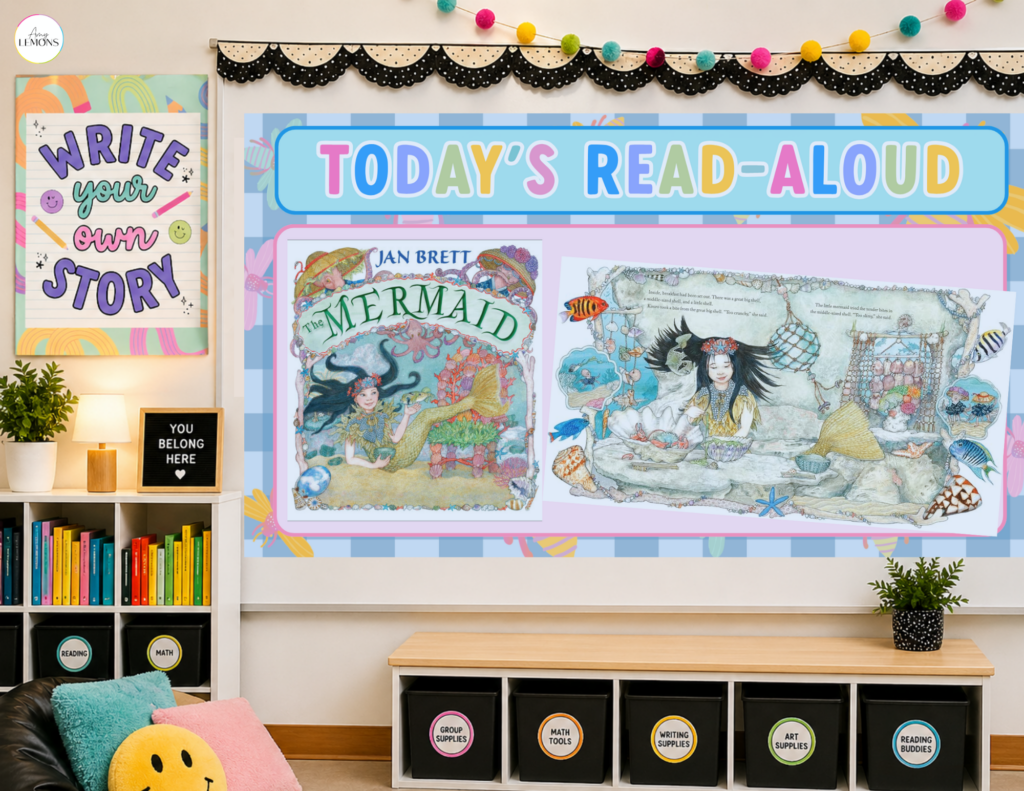
Small groups should feel strategic. NOT chaotic.
One of the easiest ways instructional time gets lost is through messy transitions.
Calling out names.
Repeating directions.
Students asking where they go.
Groups getting off task before they even begin.
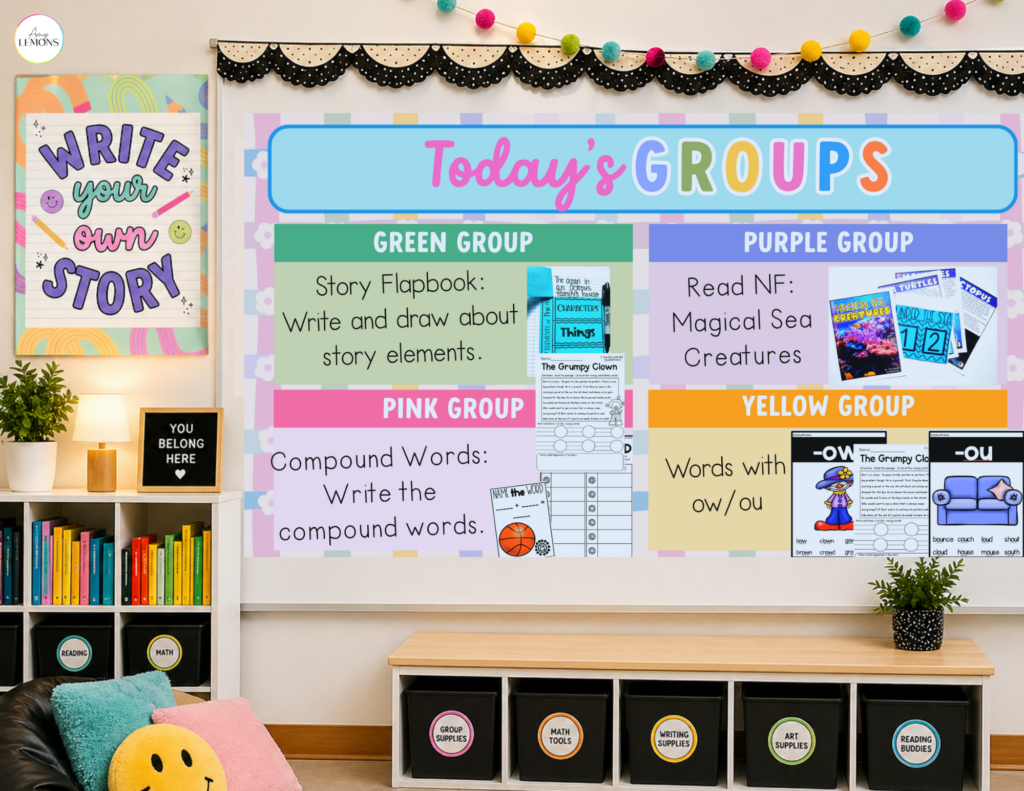
Grouping Slides help eliminate all of that. Teachers can simply project the slide and students move where they need to be.
Groups can be organized based on:
- Skill level
- Strategy groups
- Intervention needs
- Enrichment
- Collaboration
- Behavior goals
- Partner tasks
The beauty of grouping slides is that they normalize fluid grouping. Which means:
- Groups stay flexible.
- Movement becomes purposeful.
- Transitions become faster and more predictable.
Sticky Question Slides Make Differentiation Simple
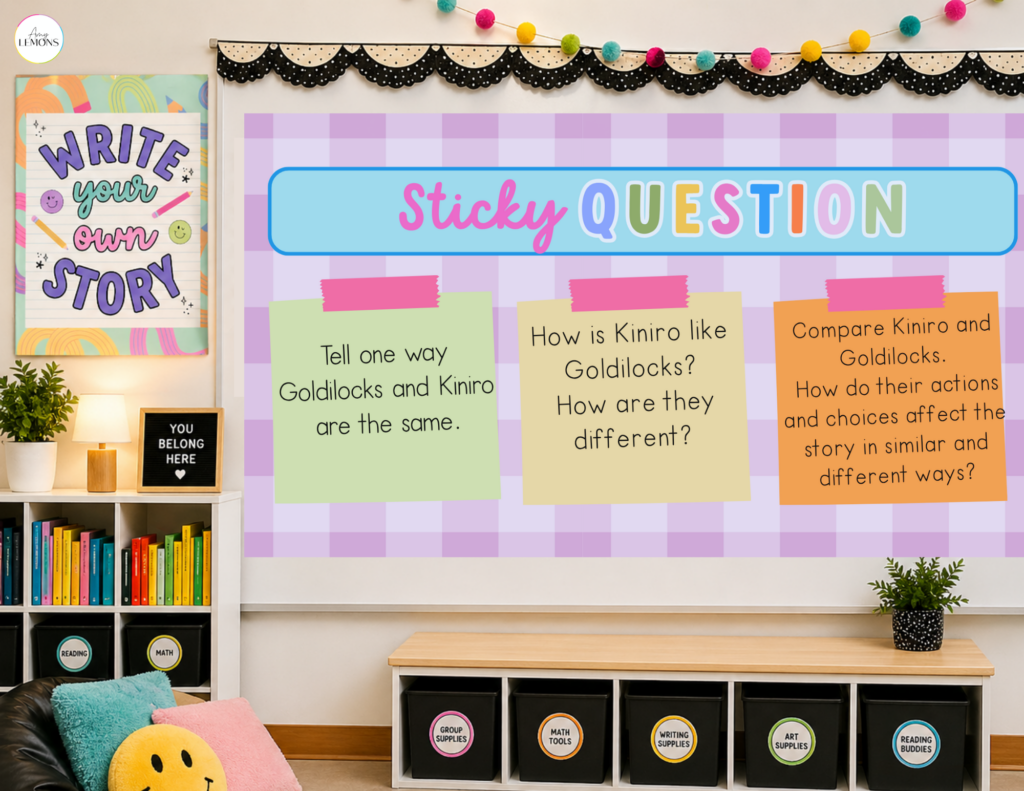
One classroom system that consistently stands out is using Sticky Question Slides to collect real-time data. This system allows teachers to gather immediate feedback without creating stacks of papers to grade later.
Here’s one simple way it can work:
As students finish independent work, teachers quietly hand them one of three colored sticky notes.
Students do not know what the colors mean. But the teacher does.
Each color represents a different level of understanding:
- Above level
- On level
- Below level
At the end of the lesson, the teacher projects a Sticky Question Slide with differentiated questions matching the sticky note colors.
Students answer the question that matches their color and turn it in as their exit ticket.
That’s it. Instant data.
Instructional Slides Support Tier I Systems That Work
At the end of the day, this is not really about slides.
It is about systems.
Strong Tier I classrooms are built on:
- Clear expectations
- Consistent routines
- Student accountability
- Purposeful engagement
- Intentional transitions
- Visible learning targets
Instructional slides support all of those things.
- They reduce repetitive teacher directions.
- They increase independence.
- They eliminate confusion.
- They protect instructional time.
Most importantly, they help create classroom environments where students know exactly what is expected of them. And when students feel safe, prepared, and successful, learning thrives.
>>> Grab Your Free Daily Instructional Slides Here <<<
Daily Instructional Slides Transform Classrooms
Classroom transformation does not always come from complicated programs or massive changes. Sometimes the most powerful shifts come from creating simple systems students can rely on every single day. Daily instructional slides help make those systems visible.
They help students transition smoothly, help teachers stay intentional, and help classrooms feel calm, organized, engaging, and purposeful.
And once those systems are in place, classrooms often begin running with more clarity and less chaos. That is the goal.