

Spring has a way of bringing fresh energy into the classroom. The days feel lighter, the conversations feel richer, and suddenly… butterflies start appearing everywhere.
If you’re looking for a way to connect reading comprehension, science, math practice, and creativity in your 1st, 2nd, or 3rd grade classroom, butterflies are the perfect bridge. Here’s how I bring it all together in what I’m calling The Butterfly Edit — a cross-curricular set of butterfly activities for the classroom that your students will love.
Butterfly Books: Stories That Transform More Than Just Characters
Butterflies make the sweetest anchor for spring read-alouds.
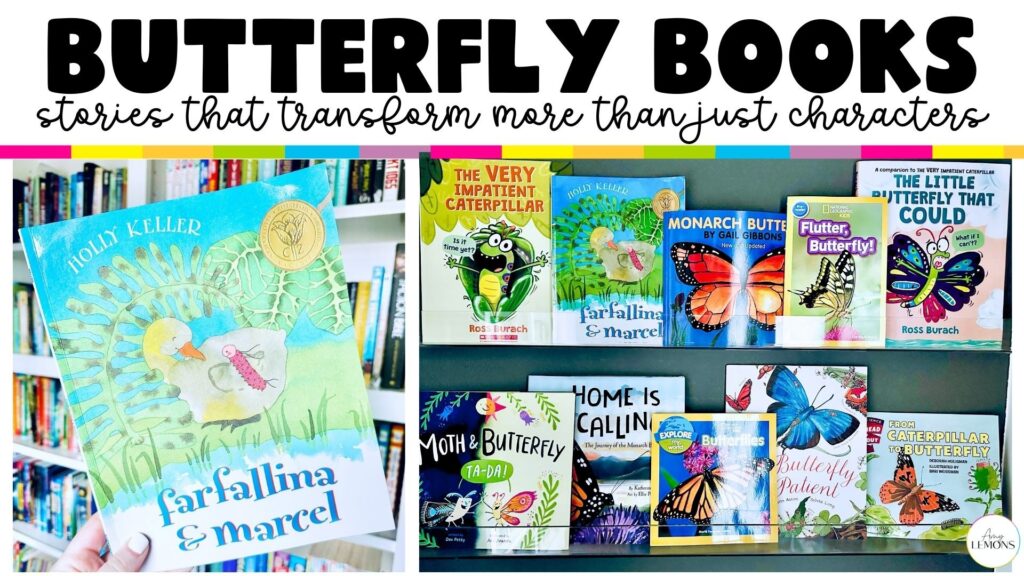
They naturally open the door to conversations about change, growth, friendship, and perseverance — making them ideal for meaningful comprehension work.
One of my favorite butterfly books to anchor this study is Farfallina and Marcel by Holly Keller. It tells the story of an unlikely friendship between a caterpillar and a gosling. They play together, explore together — and then one day, everything changes.
Farfallina forms a chrysalis. Marcel grows. Time passes. And when they finally find each other again, they’re completely different.
This book is great for digging into character traits and how characters grow and change over time.
Reading Comprehension Focus: Character Traits
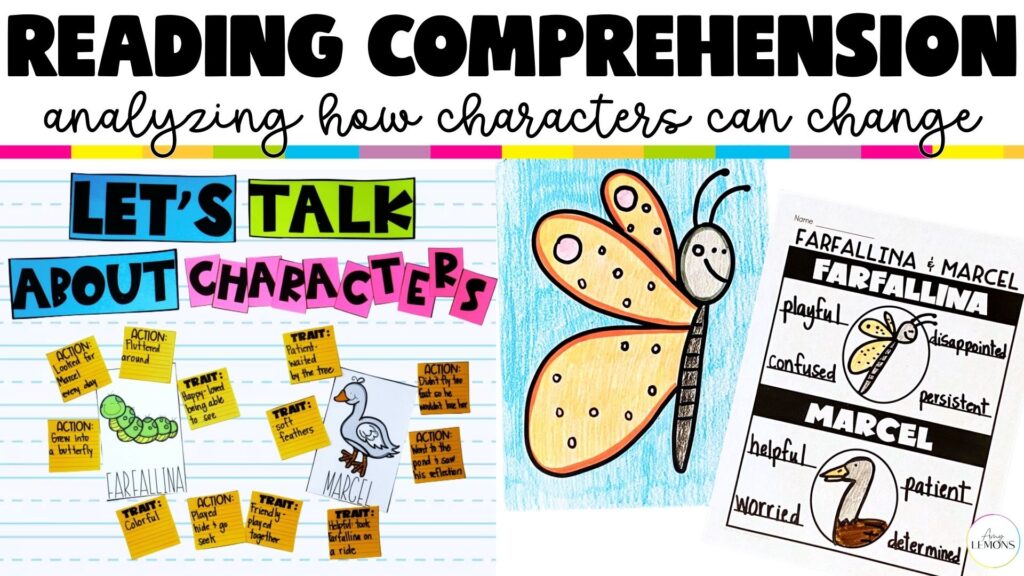
With this story, I love guiding students to:
- Identify character traits for both Farfallina and Marcel
- Use text evidence to support those traits
- Compare how the characters are alike and different
- Discuss how their friendship withstands change
Students quickly notice how much the two have in common — but when you look closely, their differences matter too. Those conversations are always rich.
Grab the FREE Character Traits Plan and Butterfly Activities inside the Free Resource Library!
Butterfly Life Cycle Snack
A tasty way to teach butterfly stages
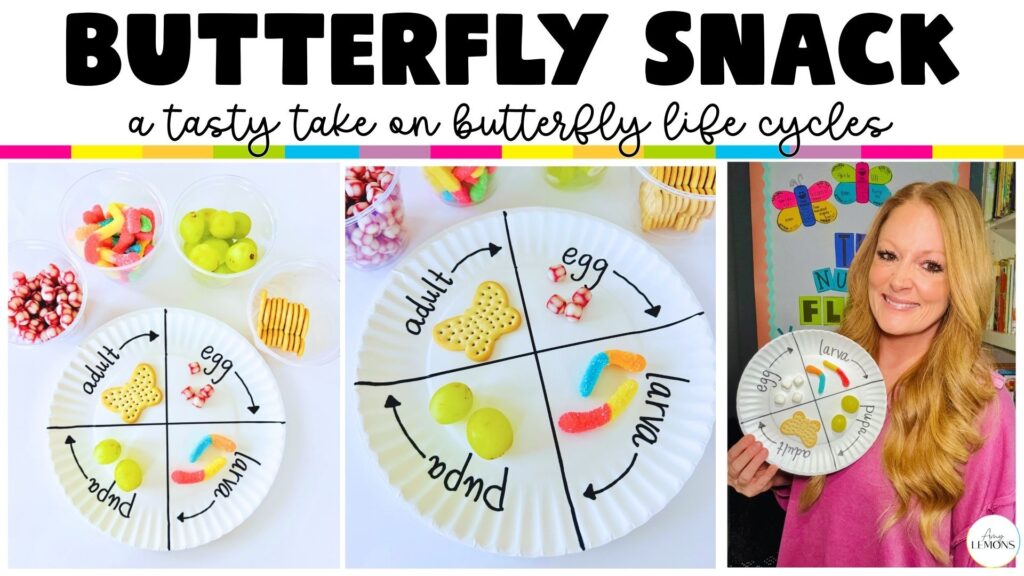
Sometimes the most memorable science lessons are the ones students can hold in their hands. This simple butterfly life cycle snack reinforces the four stages while giving students a visual connection to the concept — and it’s a classroom favorite every spring.
How to Make the Butterfly Life Cycle Snack:
- Divide a paper plate into four sections and label each with a stage: egg, larva, pupa, and adult.
- Egg — small marshmallows or yogurt-covered fruit snacks
- Larva — gummy worms to represent the caterpillar
- Pupa — a green grape to represent the chrysalis
- Adult — a butterfly-shaped cracker (Pepperidge Farm Golden Butter Crackers work perfectly!)
As students assemble their plates, have them talk through what happens at each stage. Once everyone’s reviewed the butterfly life cycle, they get to eat their work — always a win.
Researching Butterflies
From fiction to fact
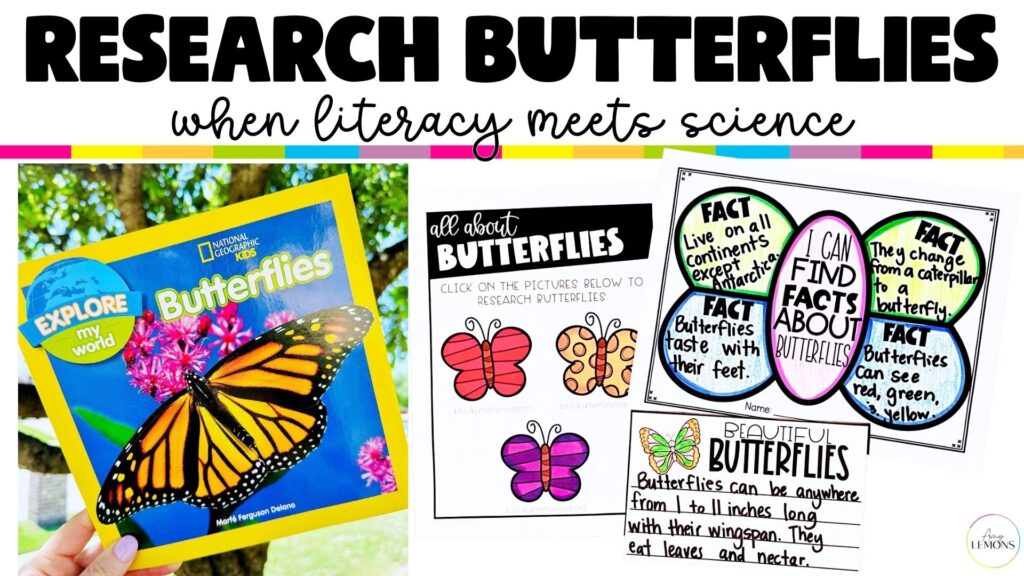
After falling in love with butterflies through fiction, it’s the time to pivot to nonfiction. Students can explore kid-friendly websites, read simple informational books, and record what they learn by category.
Great butterfly research topics for 1st–3rd grade include:
- The butterfly life cycle
- Body parts
- Habitat
- What butterflies eat
- Surprising facts
I love having students record their findings on a simple research sheet. It reinforces informational text skills while weaving science into your ELA time — and it answers the question students always ask during the read-aloud: “Is that really what happens in real life?”
Now they get to find out.
Grab the FREE Butterfly Research Recording Sheet inside the Free Resource Library!
Butterfly Math Activities
Because math can flutter, too
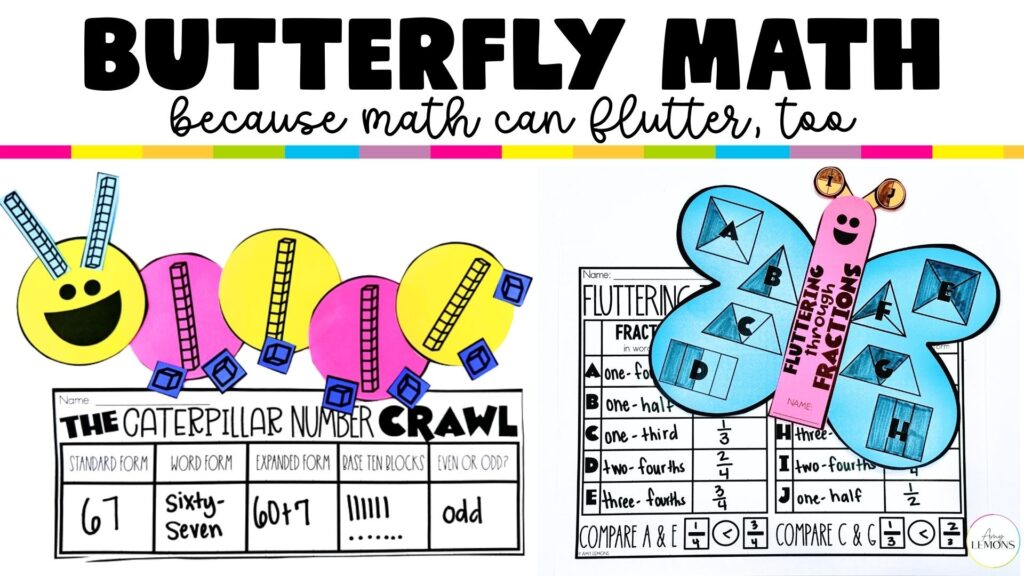
Butterflies aren’t just for reading and science — they make such a fun visual for math!
Fraction Butterflies
Fractions can feel abstract for so many students, but visual models help tremendously. Have students design butterfly wings using fractional parts — halves, fourths, or eighths. Some students may need pre-partitioned wings; others are ready to divide their own.
As they color and build, they’re:
- Visualizing parts of a whole
- Comparing fractional pieces
- Seeing how different fractions combine to make one complete butterfly
It turns an abstract concept into something they can see and reason through.
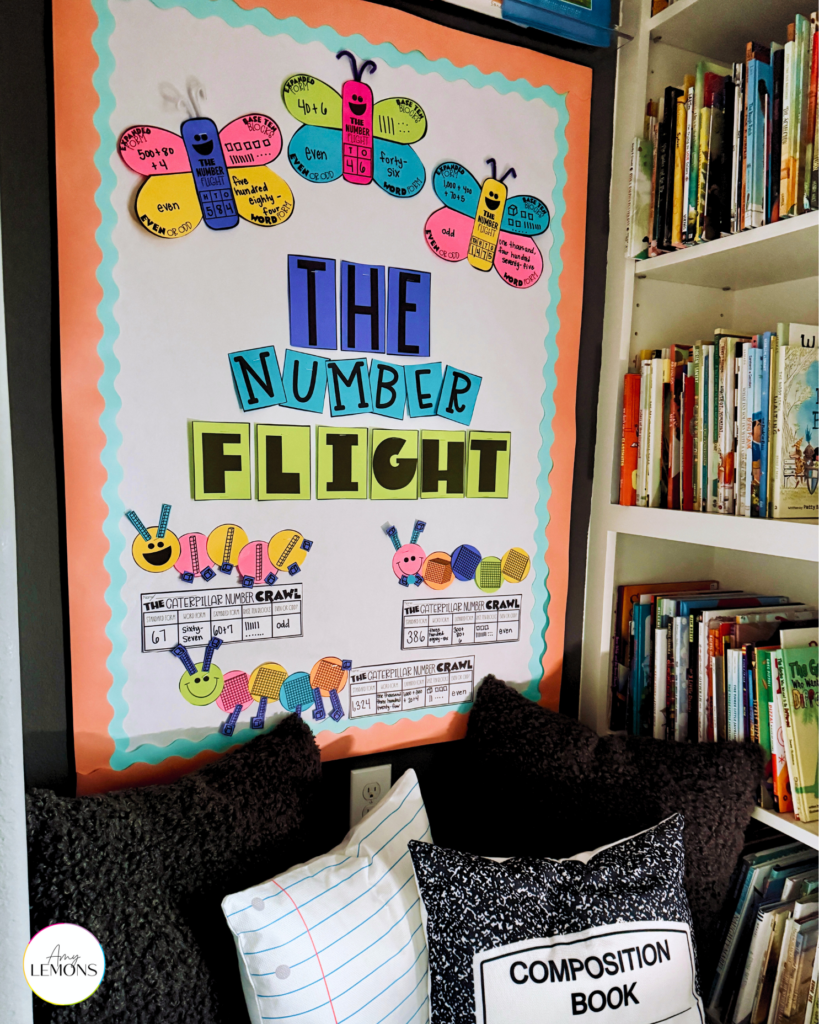
Place Value Caterpillars
Before every butterfly, there’s a caterpillar — which makes it the perfect visual segue into place value! Students build a caterpillar where each body segment represents a different place value, working with 2-, 3-, or even 4-digit numbers.
You might have students:
- Represent a number using base ten blocks
- Write it in expanded form
- Record it in word form
- Identify whether it’s odd or even
Instead of circling numbers on a worksheet, they’re constructing them — and that’s where the real understanding happens.
Butterfly Directed Drawing
Where creativity meets comprehension
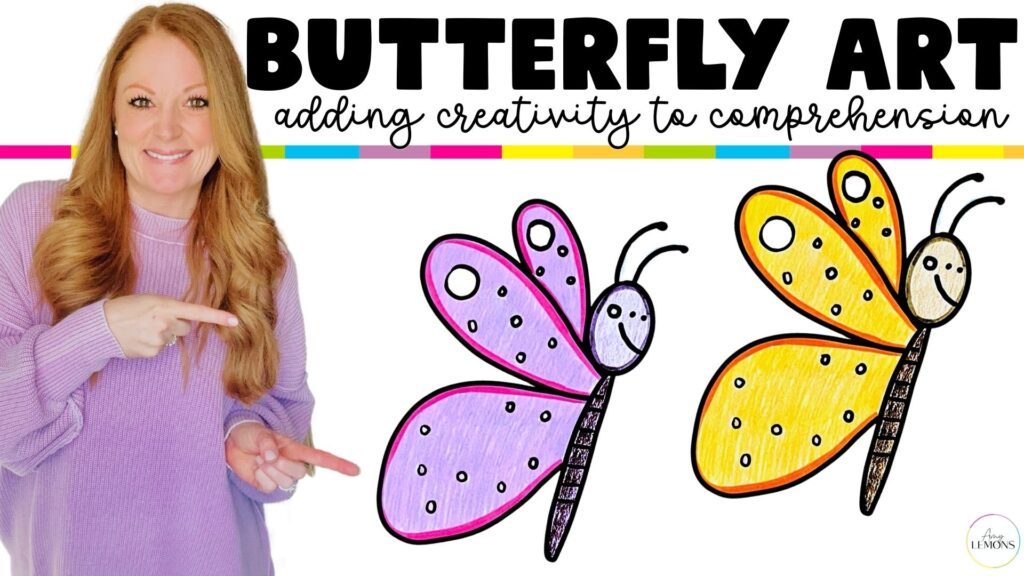
Directed drawings are one of my favorite ways to boost engagement while reinforcing learning. After reading and researching, students complete a step-by-step butterfly drawing that you can pair with a character traits response, a butterfly facts page, or a spring writing prompt.
When students create something with their hands, the learning sticks differently. There’s real ownership in it.
Grab the FREE Butterfly Drawing inside our Free Resource Library!

2 Responses
Love everything you make!
Thank you for making these videos. It is helping me become less anxious about teaching on line. I am so grateful.