Planning a penguin unit sounds fun—until you’re juggling nonfiction standards, research expectations, and student engagement all at once. Teachers want penguin activities that are meaningful, manageable, and more than just a craft.
This 5-day penguin research unit gives you a clear, easy-to-follow structure using engaging penguin books for kids and purposeful activities. Students build background knowledge, practice key nonfiction skills, and move confidently into animal research and informational writing, all within a week of focused, engaging instruction.
{Affiliate links have been used in this post, but I only share items I use and enjoy!}

Day 1: Build Background Knowledge With Nonfiction Penguin Books
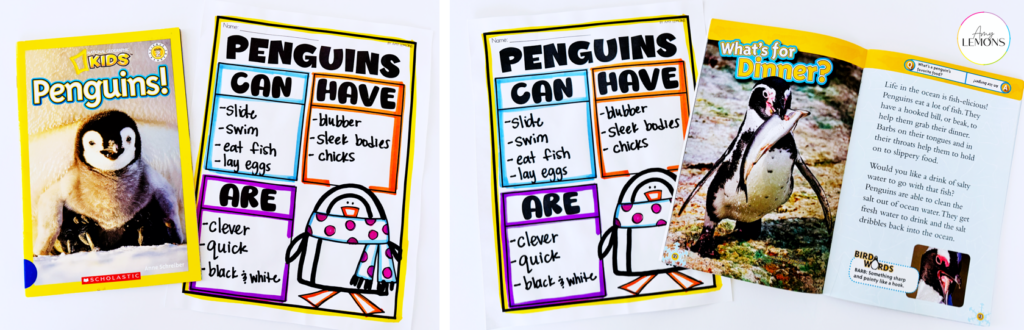
Start your penguin unit by reading Penguins!. This accessible nonfiction text is perfect for introducing basic penguin facts and setting a strong foundation for penguin research.
After reading, students record what they learn using a Penguins Can, Penguins Have, Penguins Are graphic organizer. This structure helps students categorize information and encourages them to think deeply about penguin characteristics, abilities, and traits—all while practicing early research and note-taking skills.
Day 2: Sort Penguin Facts and Deepen Understanding
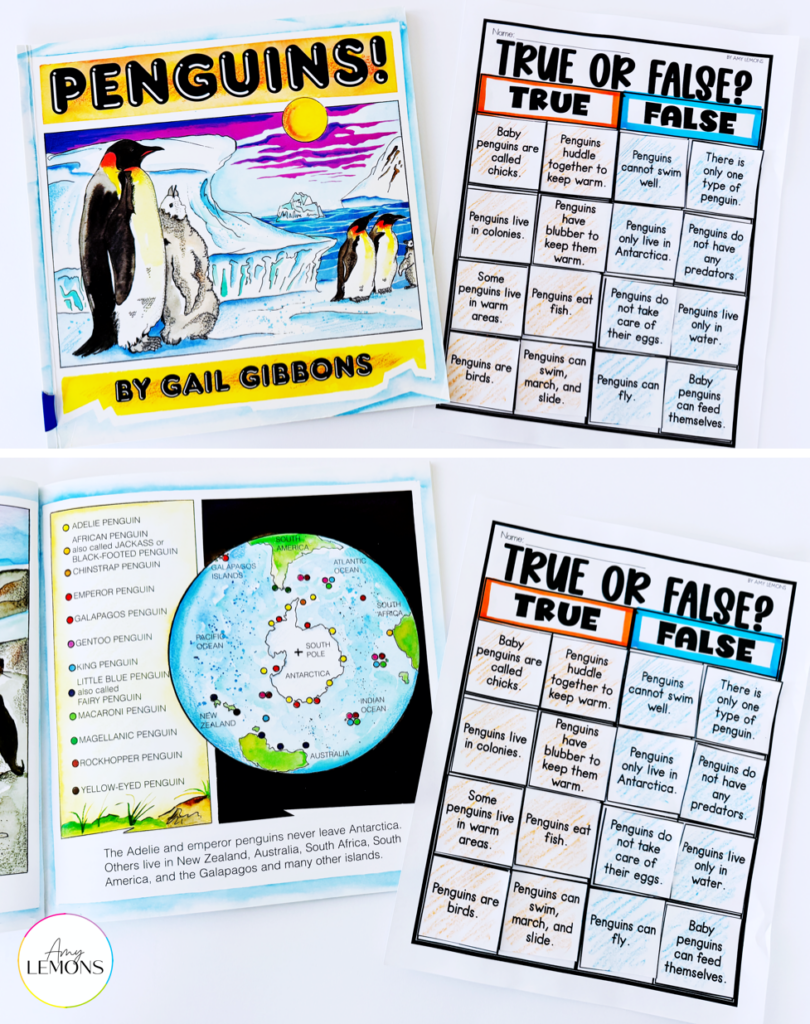
On day two, read Penguins by Gail Gibbons, which expands students’ understanding with more detailed information about penguin habitats, life cycles, and behaviors.
After the read-aloud, students sort penguin sentences into true and false categories. This activity reinforces fact identification, strengthens nonfiction comprehension, and gives students practice evaluating information—an essential skill for elementary animal research projects.
Day 3: Connect Fiction and Nonfiction Penguin Texts
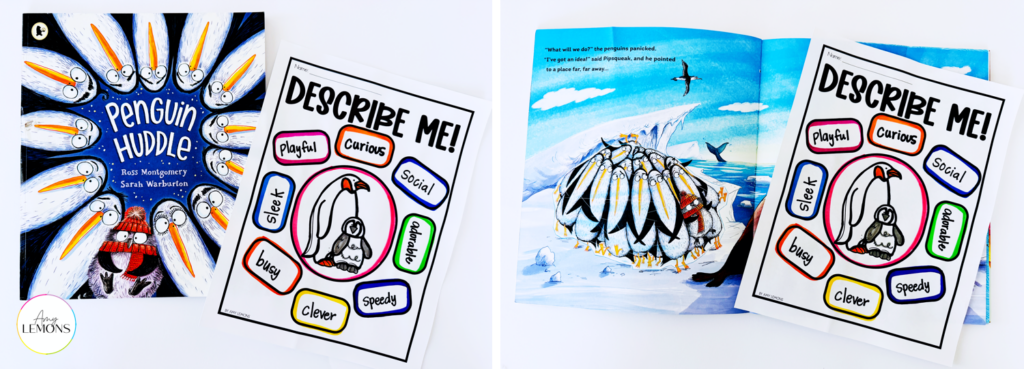
Bring in fiction with Penguin Huddle, an entertaining winter read-aloud that students love. This is a great opportunity to compare what students have learned through nonfiction penguin research with how penguins are portrayed in stories.
After reading, students describe penguins by focusing either on the real animal or the story characters. This activity supports descriptive writing, character analysis, and meaningful connections between fiction and nonfiction texts.
Day 4: Research Penguin Species
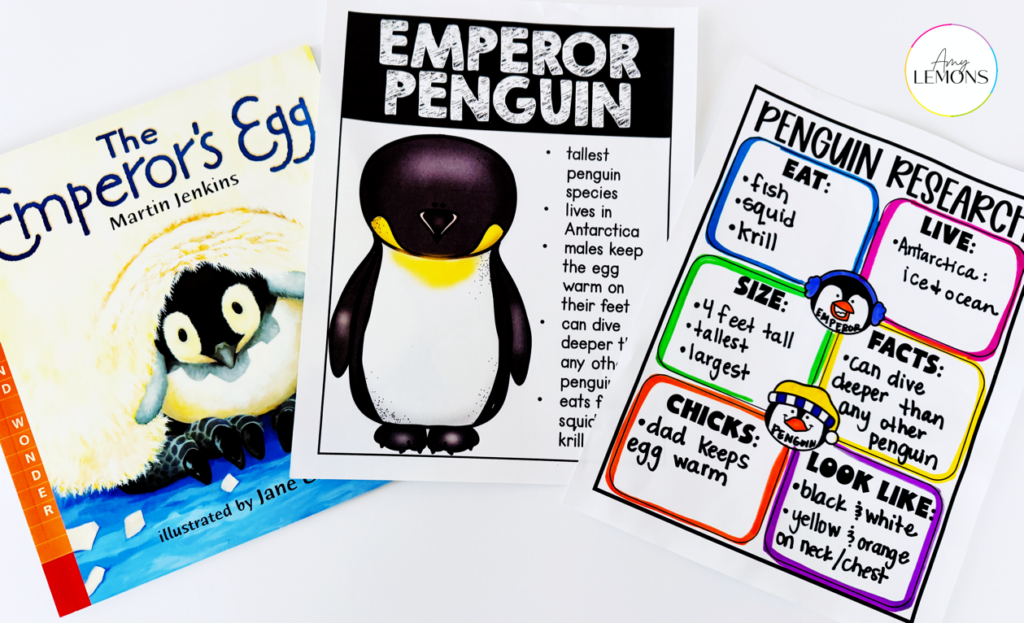
On day four, students dive deeper into penguin research by learning about specific penguin species using The Emperor’s Egg or Penguin Profiles. These books are ideal for helping students understand that not all penguins are the same.
Students choose one type of penguin to research and gather facts using classroom books, penguin profiles, and kid-friendly websites. This step strengthens animal research skills while helping students practice identifying relevant facts and organizing information around a focused topic.
Day 5: Write, Create, and Assess Penguin Research

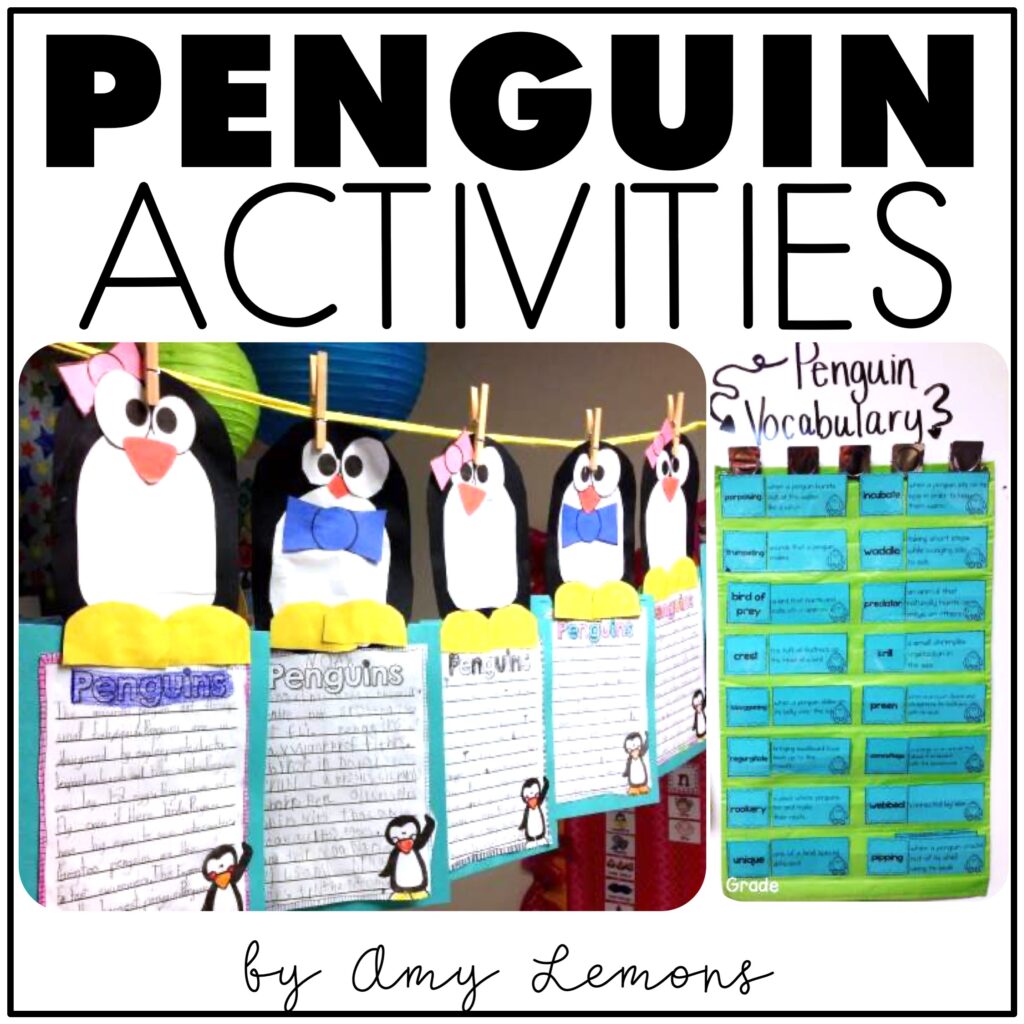
On the final day, students turn their penguin research into an informational writing piece. Using their completed graphic organizers, students form sentences and paragraphs, then display their writing alongside a penguin craft for a polished final project.
To wrap up the unit, review key penguin facts using question cards or discussion prompts before giving a quick assessment. This provides valuable insight into student understanding while reinforcing key research concepts.

A Simple, Effective Penguin Research Unit for Winter
This 5-day penguin research unit keeps instruction intentional and manageable while maximizing student engagement. By pairing strong penguin books with hands-on activities, teachers can build content knowledge, support nonfiction comprehension skills, and guide students toward confident animal research and informational writing—all while celebrating one of students’ favorite winter animals.