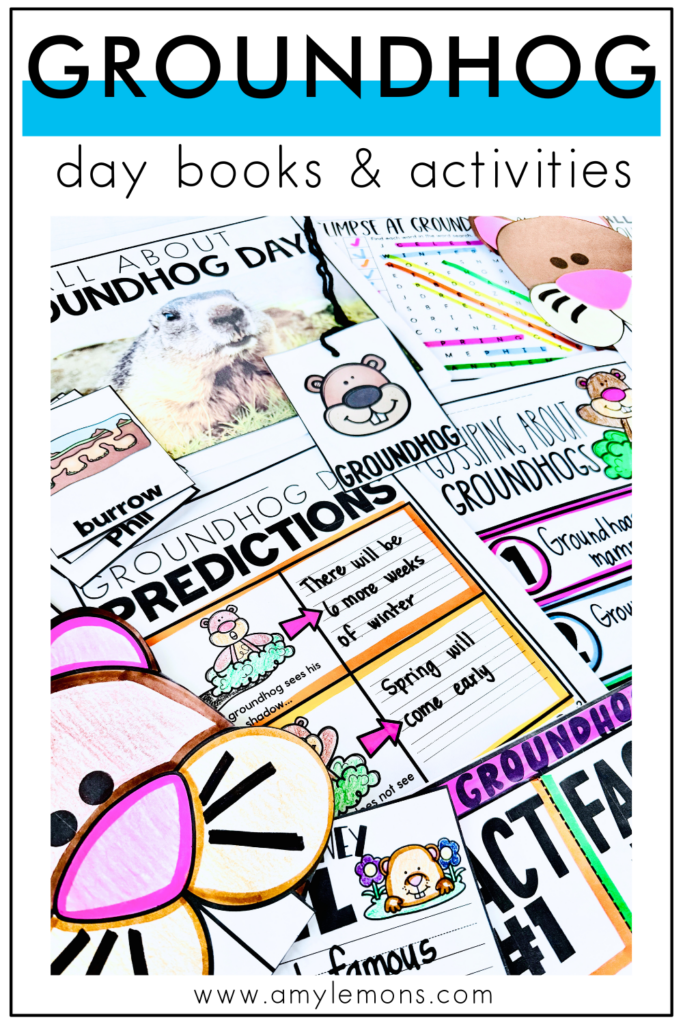
Groundhog Day is one of those holidays that sneaks up on us in early February. It’s fun, familiar, and short enough to fit perfectly into a day (or two) of instruction without derailing your schedule. Over the years, I’ve found that Groundhog Day is the perfect opportunity to blend reading, writing, history, science, and a little excitement for students, all without a ton of prep.
If you’re looking for simple, purposeful ways to make the most of Groundhog Day in your classroom, here are some of my favorite Groundhog Day activities that keep students engaged and learning from start to finish.
Groundhog Day Books

I always like to start Groundhog Day with a stack of picture books. Books instantly give students context, vocabulary, and something concrete to connect their learning to. Groundhog Day stories tend to be humorous and relatable, which makes them especially engaging for younger students.
I use a mix of fiction and nonfiction books so students can enjoy the fun side of the holiday while also learning what Groundhog Day is actually about. Fiction books help us talk about characters, feelings, and problem-solving, while nonfiction texts allow us to pull facts and clear up common misconceptions. Starting with books sets the stage for everything else we do throughout the day and gives students shared background knowledge to reference during discussions.
Learning the History of Groundhog Day
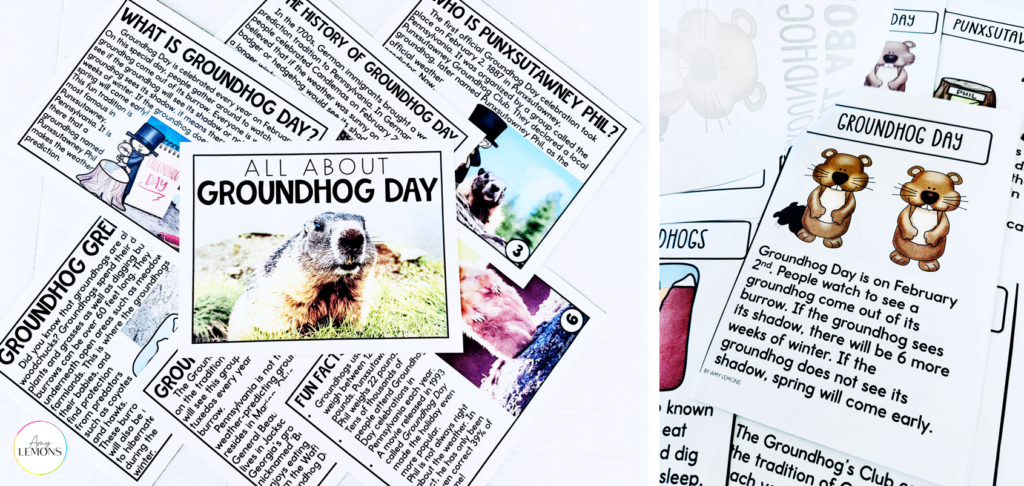
After reading picture books, I like to dig into the history of Groundhog Day in a way that feels accessible for young learners. This is where integrating history with reading really shines. Instead of just telling students about the holiday, I let them explore it through a nonfiction reader that breaks the information down into kid-friendly language.
We talk about where Groundhog Day came from, who Punxsutawney Phil is, and why people pay attention to a groundhog’s shadow in the first place. This naturally leads to great conversations about traditions, predictions, and how long people have been celebrating this day.
Using a nonfiction text helps students practice reading informational text while also learning real-world content, which is always a win in my book.
Making Groundhog Predictions: Team Winter or Team Spring
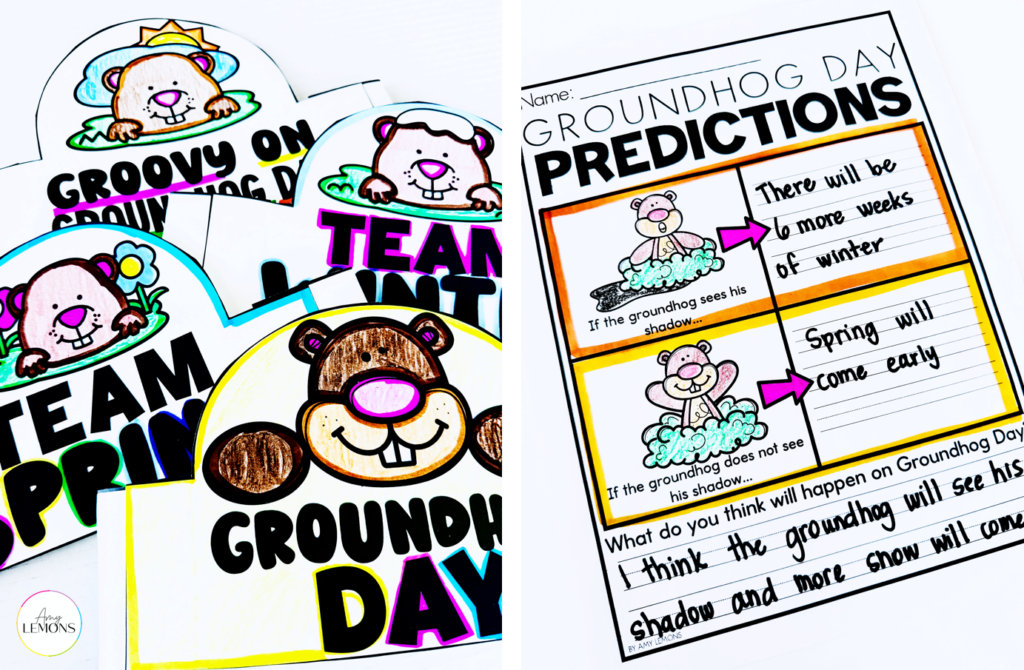
Once students understand what Groundhog Day is all about, it’s time to let them make their own predictions. This is easily one of their favorite parts of the day. Students decide whether they think the groundhog will see his shadow or not, and what that means for the weather.
To make it extra fun, students choose a side and wear a prediction hat that shows whether they’re on Team Winter or Team Spring. This turns a simple prediction activity into something interactive and memorable.
It also gives students a chance to explain their thinking, whether verbally or in writing, which helps reinforce reasoning and opinion-based responses in a very age-appropriate way.
Building Fluency with a Groundhog Day Reader’s Theater
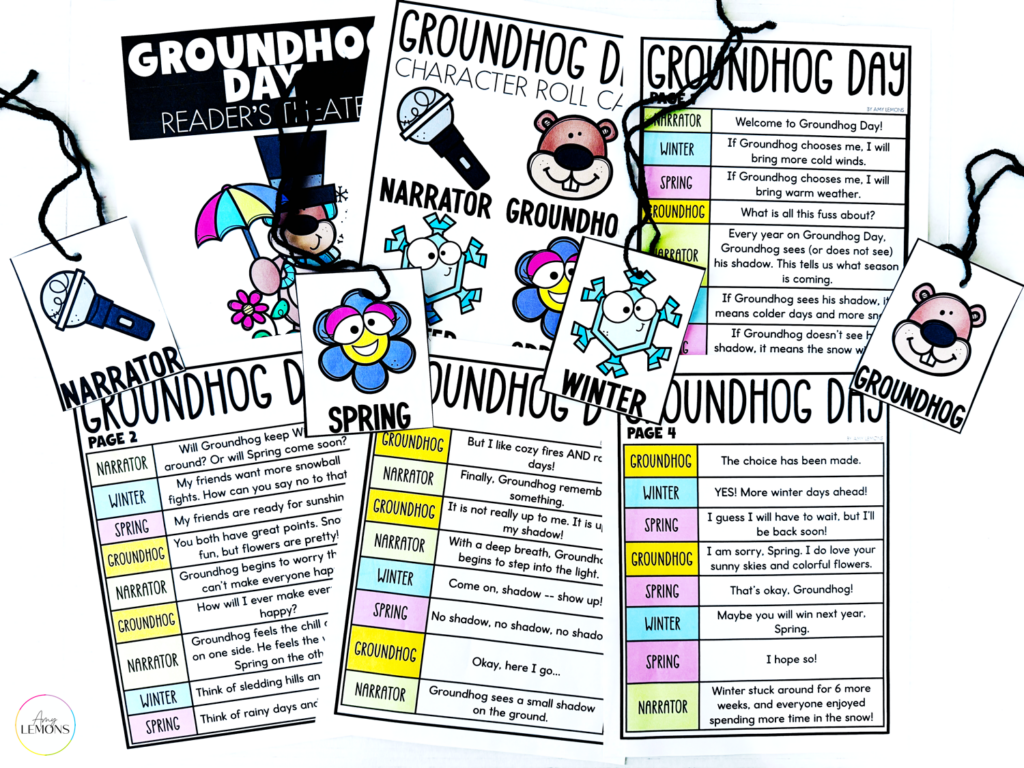
Reader’s Theater is one of my go-to tools for working on fluency and expression, and Groundhog Day is a great excuse to use it. A Groundhog Day–themed Reader’s Theater allows students to practice reading with expression while still reinforcing what they’ve learned about the holiday.
Students love taking on different roles, and it naturally encourages rereading, which is so important for building fluency. At the same time, the script keeps the focus on Groundhog Day, weather predictions, and seasonal changes.
It’s meaningful practice that doesn’t feel like extra work to students, and it doesn’t require hours of prep for teachers.
Incorporating Shadows and Science

To wrap everything together, I like to bring in a simple science activity that connects directly to the idea of shadows. Using a flashlight and a groundhog cutout, students experiment with how shadows change depending on the position of the light source.
Students observe how shadows grow, shrink, and move, and then record what they notice. This hands-on experiment helps make the concept of shadows much more concrete, especially for younger learners. It also ties perfectly back to the reason Groundhog Day exists in the first place…whether or not the groundhog sees his shadow.
A Meaningful (and Manageable) Way to Celebrate Groundhog Day
Groundhog Day doesn’t have to be complicated to be effective. With the right mix of books, discussion, reading practice, and hands-on learning, it can become a memorable day that students actually learn from. I love how these Groundhog Day activities work together to cover multiple standards while still feeling fun and seasonal.
If you’re anything like me, you’re always looking for ways to make the most of instructional time without adding more to your plate. Groundhog Day is a great chance to do just that: engage students, reinforce important skills, and create learning moments they’ll remember long after winter is over.
{Affiliate links have been used in this post, but I only share items I use and enjoy!}