You don’t have to feel intimidated about introducing Poetry writing to your elementary students. In fact, when you break it down into a clear process and make it hands-on, it can become one of the most engaging writing experiences of the year.
This 5-day poetry unit walks students through the writing process step by step: brainstorm, write, revise, edit, and publish. Using a five-senses poem as the focus, students learn how to describe, expand, and refine their writing in a way that feels fun, structured, and meaningful.
If you’re looking for an easy way to introduce poetry writing while building strong foundational skills, this approach works beautifully with 2nd and 3rd-grade students.
Brainstorm: Building Ideas with the Five Senses

Every strong piece of writing starts with great ideas, and poetry is no different. On the first day, students focus on brainstorming descriptive words using their five senses.
Using a simple topic, such as popcorn, makes this process incredibly engaging. It’s something students can see, hear, smell, taste, and touch, which naturally leads to a rich vocabulary. As students explore each sense, they generate adjectives to describe their experience.
You can guide this by creating a whole-class anchor chart and organizing ideas by:
- Looks
- Sounds
- Smells
- Tastes
- Feels
Hands-on experiences make a big difference here. Let students interact with the object (even something as simple as tasting popcorn), and you’ll immediately see more detailed and thoughtful word choices.
This step lays the foundation for everything that follows.
Write: Turning Ideas into a Five Senses Poem
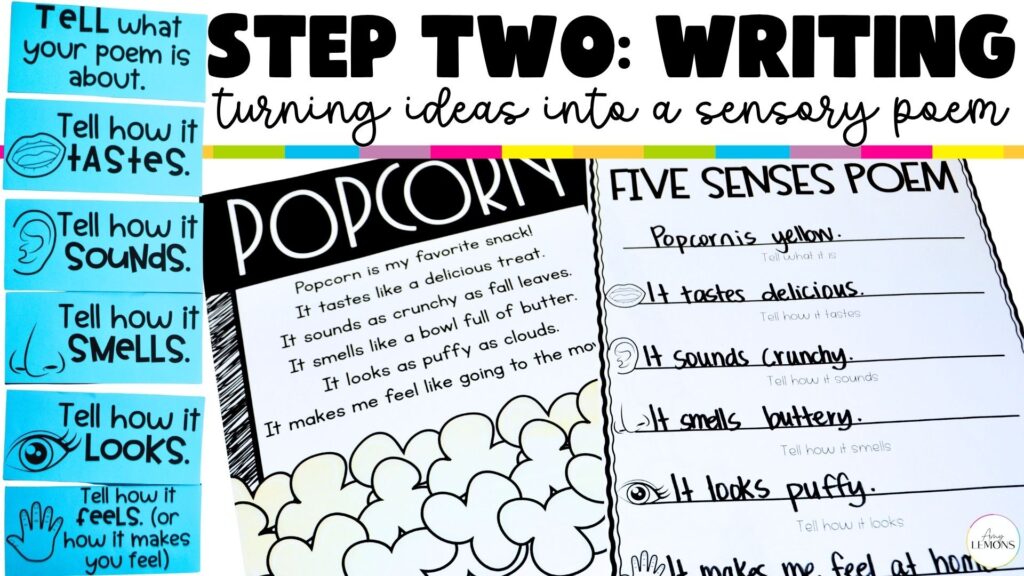
Once students have a bank of descriptive words, they’re ready to start writing. A five senses poem provides just the right amount of structure for young writers. Students begin by organizing their ideas into a simple format:
- Opening line (what the poem is about)
- One line for each sense
This clear structure helps students focus on content rather than getting overwhelmed by format. At this stage, the goal is not perfection. It’s about getting ideas down and learning how to turn descriptive words into complete thoughts. Students create a rough draft that they will continue to build on throughout the week.
Pro Tip: Peer sharing can also be powerful here. Letting students talk through their ideas with a partner helps them refine their thinking before moving on.
Revise: Adding Similes for Stronger Writing
This is where the magic truly begins to unfold.
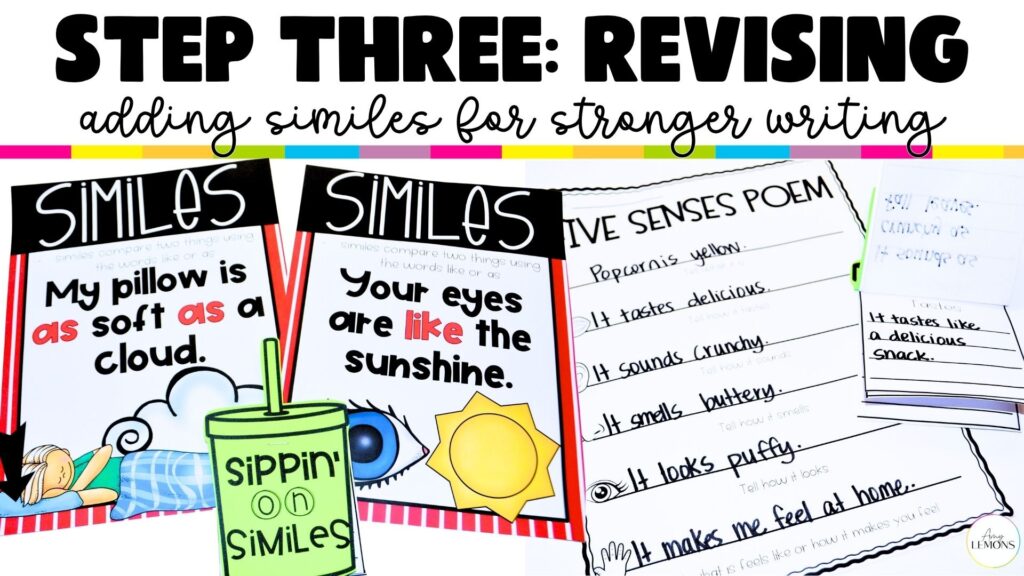
On revision day, students learn how to strengthen their writing by adding similes. They take their simple sentences and expand them by comparing ideas using like or as.
For example:
- “It sounds crunchy” becomes
- “It sounds as crunchy as fall leaves”
Students don’t need to add a simile to every line, but even adding one or two can make a big difference in the quality of their writing. This step helps students move beyond basic descriptions and begin experimenting with more expressive language.
It also reinforces an important writing skill they will use across all genres.
Edit: Strengthening Writing with Conventions
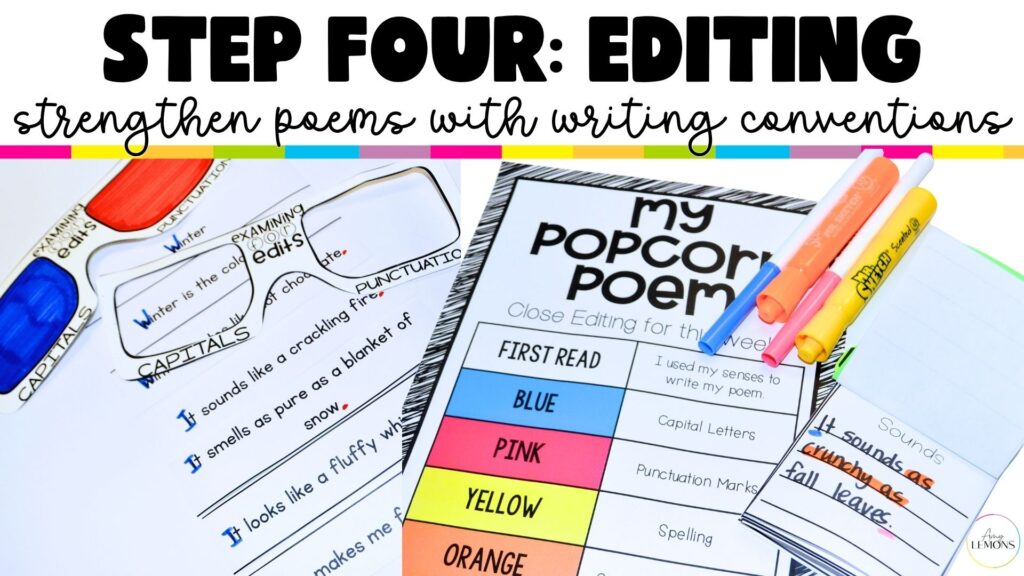
After revising, it’s time to focus on editing. Students go back through their poems to check for:
- Capital letters
- Punctuation
- Spelling
Because each line of the poem is written as a complete sentence, this becomes a great opportunity to reinforce basic writing conventions.
To keep this step engaging, you can turn editing into an interactive experience. Have students work in pairs or small groups to review each other’s work. Adding something simple like “editing glasses” or colored pencils for different checks can make this process feel more like a game than a task.
Editing helps students slow down and take ownership of their writing.
Publish: Celebrating Student Writing

Publishing is always a favorite.
Students take their final draft and create a polished version of their poem. This can be as simple or as creative as you’d like. In this unit, students create a fun popcorn-themed craft where their poem “slides” into a popcorn bucket.
This step is so important because it gives students a sense of pride in their work. They’ve gone through the full writing process, and now they get to share it.
You can:
- Have a poetry share day
- Display poems on a bulletin board
- Let students read their poems aloud
When students know their work will be seen and celebrated, they naturally put more effort into each step of the process.