

Some books just stay with you—and Silver Packages by Cynthia Rylant is one of those special read-alouds that makes a lasting impression on students. I recently shared this beautiful story during a 2nd grade comprehension lesson, and it turned into one of the most heartfelt reading lessons we’ve had this season.
In this post, I’ll walk you through exactly how I brought this story to life in the classroom—with a silver package prediction activity, hands-on discussion prompts, and a writing extension that helps students reflect on the lesson learned.
Introducing Silver Packages by Cynthia Rylant

If you’ve never read Silver Packages, it’s a touching holiday story set in the Appalachian Mountains. Each year, a train known as the “Christmas Train” comes through the mountains delivering silver packages to children. The story follows a boy named Frankie who eagerly waits for the train every year, dreaming of receiving a toy train of his own. As Frankie grows up, he learns that the real gifts we give and receive in life often come in unexpected forms.
This book is perfect for teaching making predictions, identifying important story events, and determining the lesson or moral of a story.
When I read Silver Packages with 2nd graders, I wanted to make the lesson interactive and memorable—so I brought a silver package of my own!
Preparing the Silver Package

Before our read-aloud, I wrapped a box in shiny silver wrapping paper and filled it with small items that represent key events and symbols from the story. Inside the box were:
- A toy train
- Dollar bills
- A stethoscope
- Cozy socks
- A thermometer
- Mittens
Each object connects to something meaningful in the book, but students don’t know that yet! The mystery adds excitement and allows them to practice their prediction skills before reading.
Previewing the Text and Making Predictions

Before reading, I told students that each item in the silver package was a clue about what might happen in the story. One by one, we pulled out each object and discussed:
- What might this object represent?
- How could it connect to the title Silver Packages?
- What kind of story do you think this will be?
As we revealed each item, students made and adjusted their predictions. They shared ideas like “Maybe it’s about a doctor,” or “Someone might get sick,” or “The train could bring presents.”
This simple predictions activity helped build curiosity and gave students a purpose for listening—they were eager to find out how each item would appear in the story.
Reading the Story and Connecting the Lesson
Then came the best part—reading the story aloud. As we read, students kept their predictions in mind, listening for when each item appeared in the text. After reading, we revisited the objects from the silver package and matched them to moments in the story.
For example:
- The toy train reminded us of Frankie’s childhood wish.
- The dollars connected to the sick man who wanted to pay back the townspeople for their kindness.
- The mittens and socks represented warmth and generosity.
From there, we discussed the lesson that Cynthia Rylant wanted readers to learn. The story reminds us that true kindness doesn’t expect anything in return and that the gifts that matter most often come from the heart.
This conversation was powerful. Students made personal connections, shared examples of kindness, and reflected on how helping others can be its own reward.
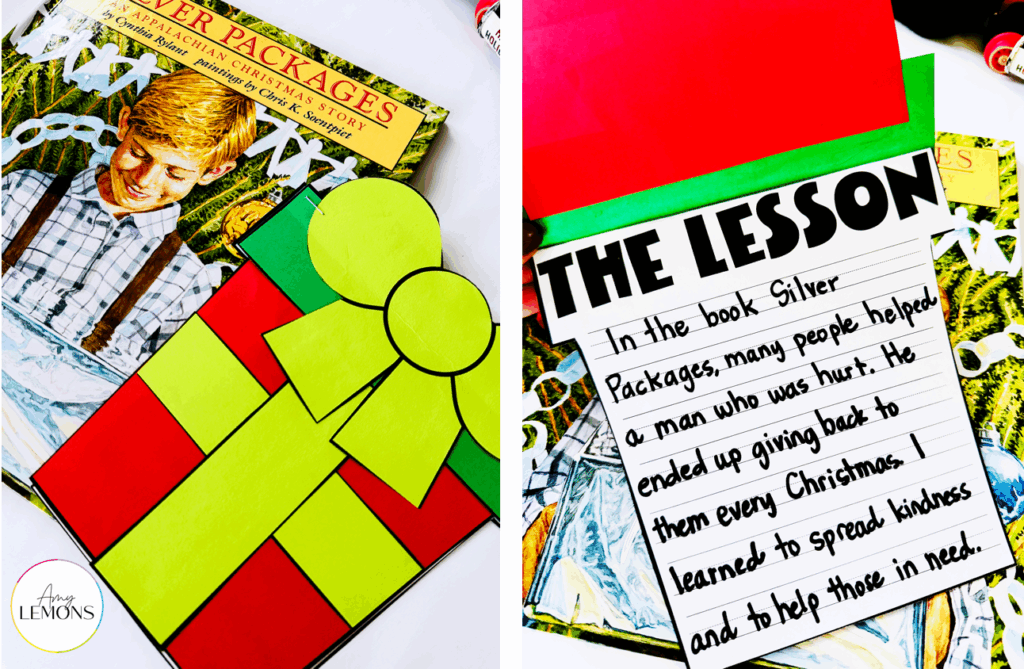
Extension Activity: Gift Booklet of Lessons Learned
To wrap up the lesson (pun intended!), students can create a Gift of Kindness booklet. Each page features a “gift” that represents something they learned from the story.
Some prompts you might include:
- A gift of kindness — Help others just because it’s the right thing to do.
- A gift of gratitude — Appreciate what you have.
- A gift of giving — Share joy with others.
This extension activity reinforces comprehension, reflection, and writing—all while keeping the heart of the story at the center.
Teaching Tips for This Lesson
- Use real objects whenever possible—tactile engagement helps students think critically and stay invested.
- Pause strategically during the read-aloud to confirm or adjust predictions.
- Encourage discussion rather than “right” answers; the beauty of this story is how many meaningful lessons students can uncover.
- Connect the moral to real life—ask, “When have you helped someone without expecting something in return?”