
Multiplication is one of my VERY favorite math units. I feel like I say that about everything… except regrouping, ha! As long as I’m not teaching regrouping, I’m in my happy place. There’s just something so fun about watching students make that shift from addition into multiplication and really get it.
Today, I wanted to share a few of my favorite hands-on multiplication activities for 2nd grade that make introducing multiplication feel exciting, meaningful, and (most importantly) easy to understand.

Start with Concrete Experiences
When I introduce multiplication, I always start with equal groups and repeated addition. Before we ever talk about multiplication symbols, I want students to see it, build it, and talk about it.
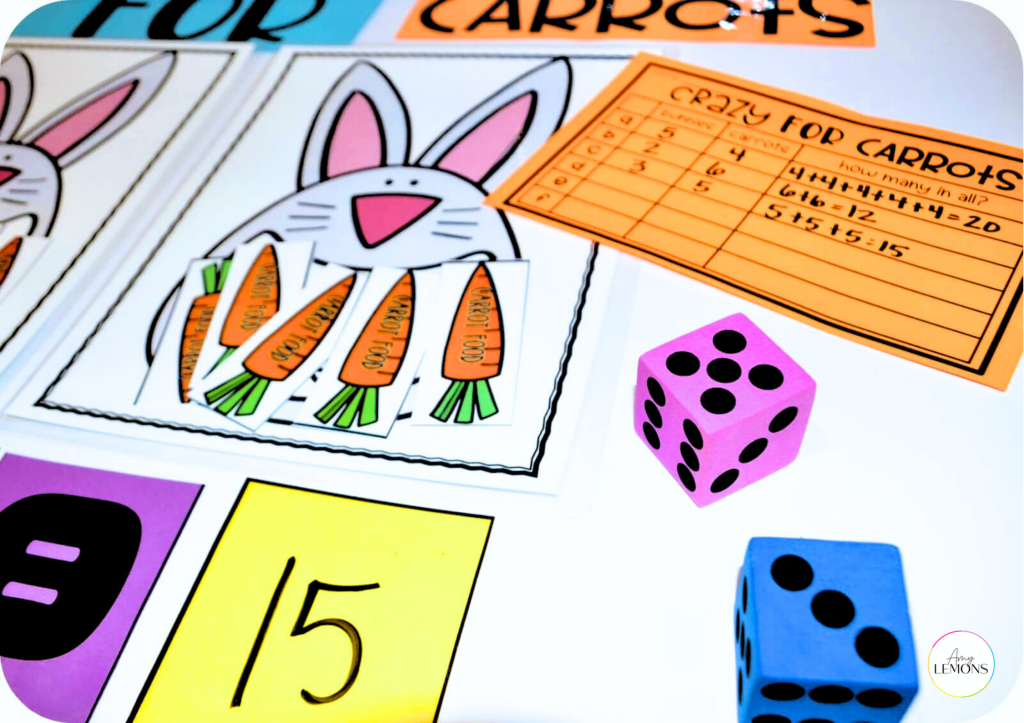
One of my favorite ways to do this is with a simple (and very engaging) “Feed the Bunnies” activity.
We sit in a large circle so everyone can see and participate. I have students help build multiplication situations step-by-step:
- One student rolls a die to determine the number of groups (our rabbits 🐰)
- Another student rolls a die to determine how many items go in each group (our carrots 🥕)
- Together, we build the model and talk through what we see
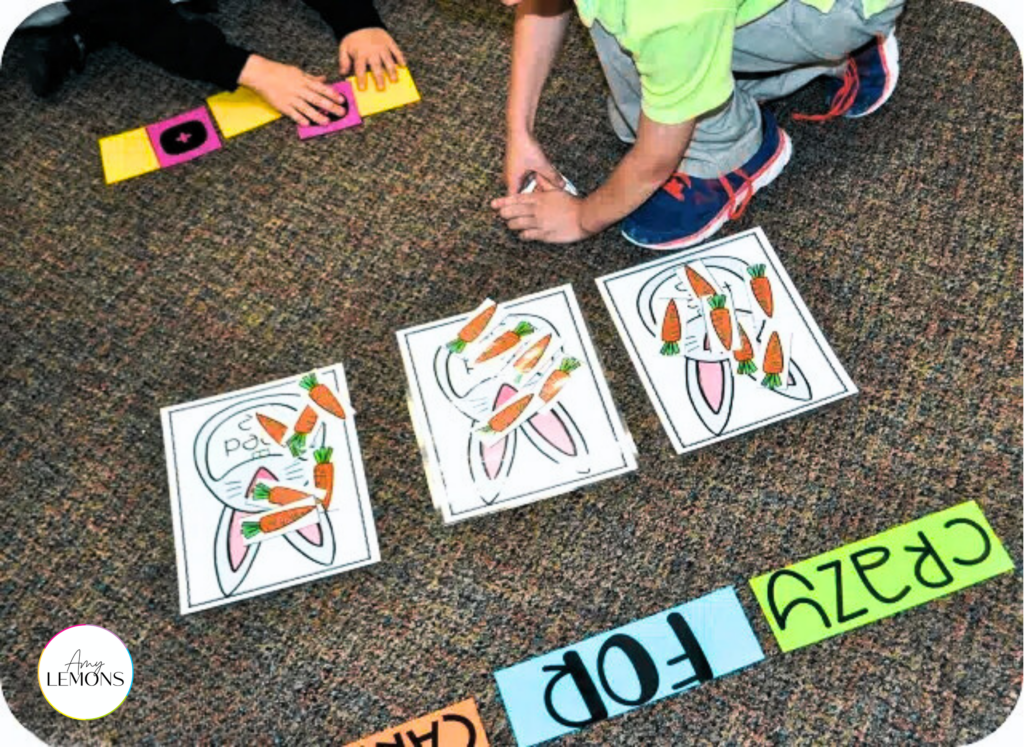
We focus heavily on language:
- “___ groups of ___”
- “Equal groups”
- “Repeated addition”
Then, as a class, we create a repeated addition equation to match the model.
This activity is simple, but it is so powerful. It gives students a visual and verbal foundation for multiplication before introducing the abstract equation. Plus, because students are involved in every step, they stay engaged the entire time.
Grab this mini-lesson for multiplication by clicking HERE!
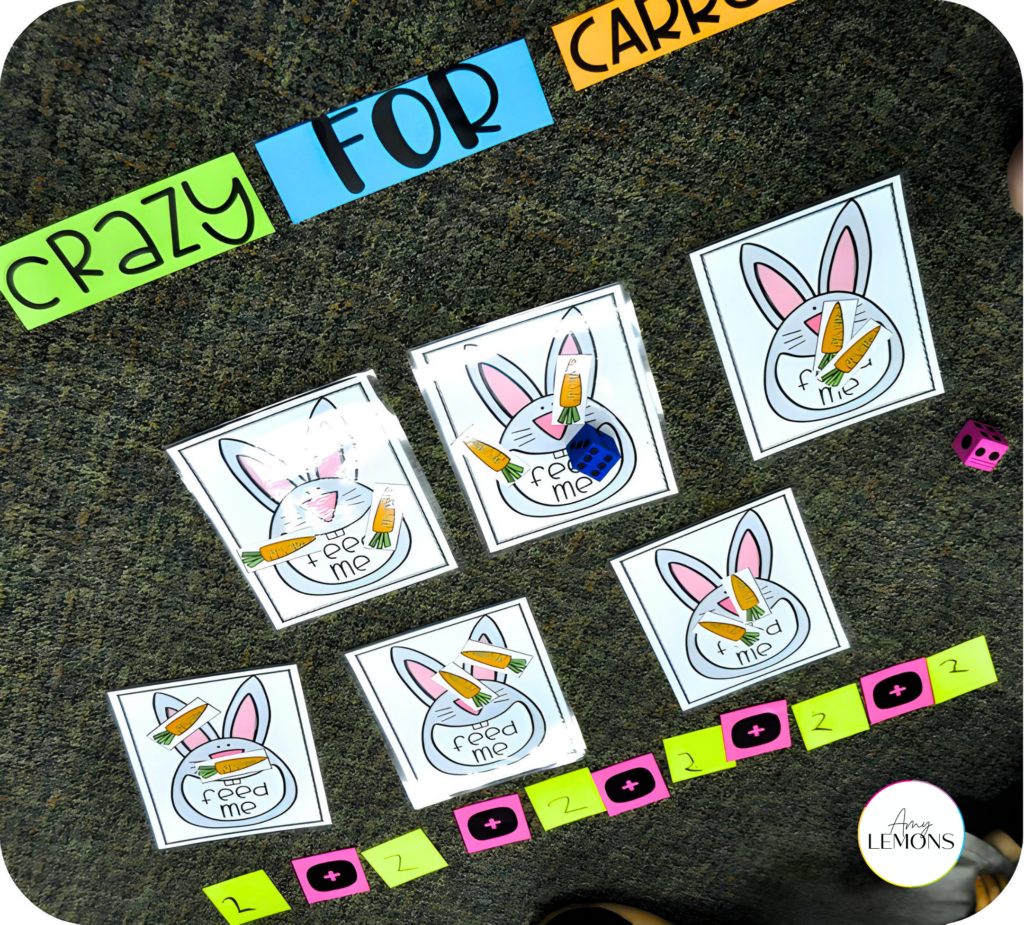
We repeat this several times, letting different students take the lead. Everything is laminated so we can quickly reset and keep the momentum going.
Make It Memorable with Hands-On (and Tasty!) Math
After students have had time to explore multiplication with concrete models, we move into one of their FAVORITE activities… food math!
Now, I know not every classroom can use food, and that’s totally okay. But if you can, this is such a memorable way to reinforce multiplication concepts.
For this activity, you’ll need:
- Oreos (these represent the groups)
- M&Ms (these represent the objects in each group)
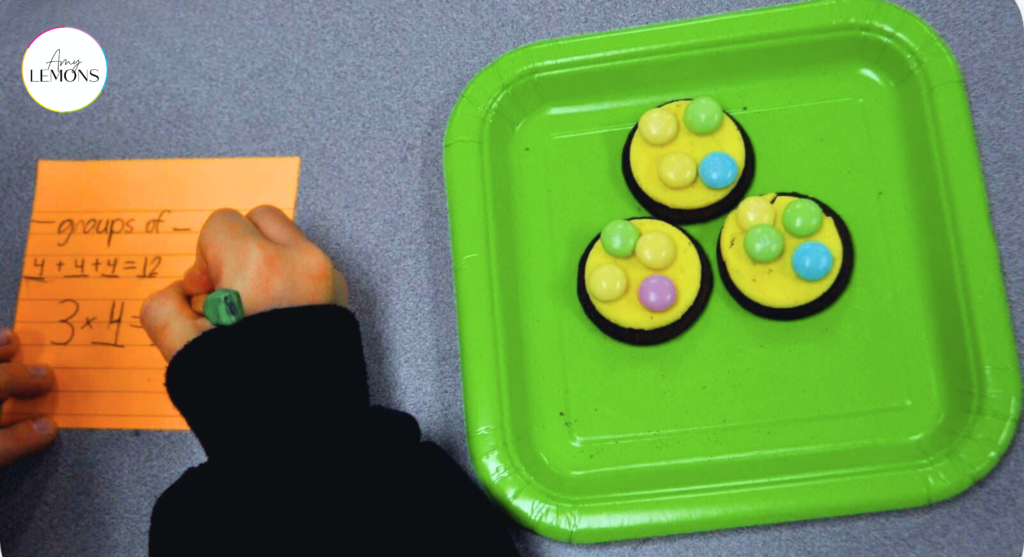
I gave each student the same number of Oreos since we were just introducing multiplication. Keeping one part consistent helped avoid confusion on day one.
Students then decided how many M&Ms to place on each Oreo to create equal groups. (And yes… we peeled off the top of the Oreo. It makes the perfect little “math tray”!)
Before they could eat their treat, students had to record their thinking:
- ___ groups of ___
- A repeated addition equation
- A multiplication equation
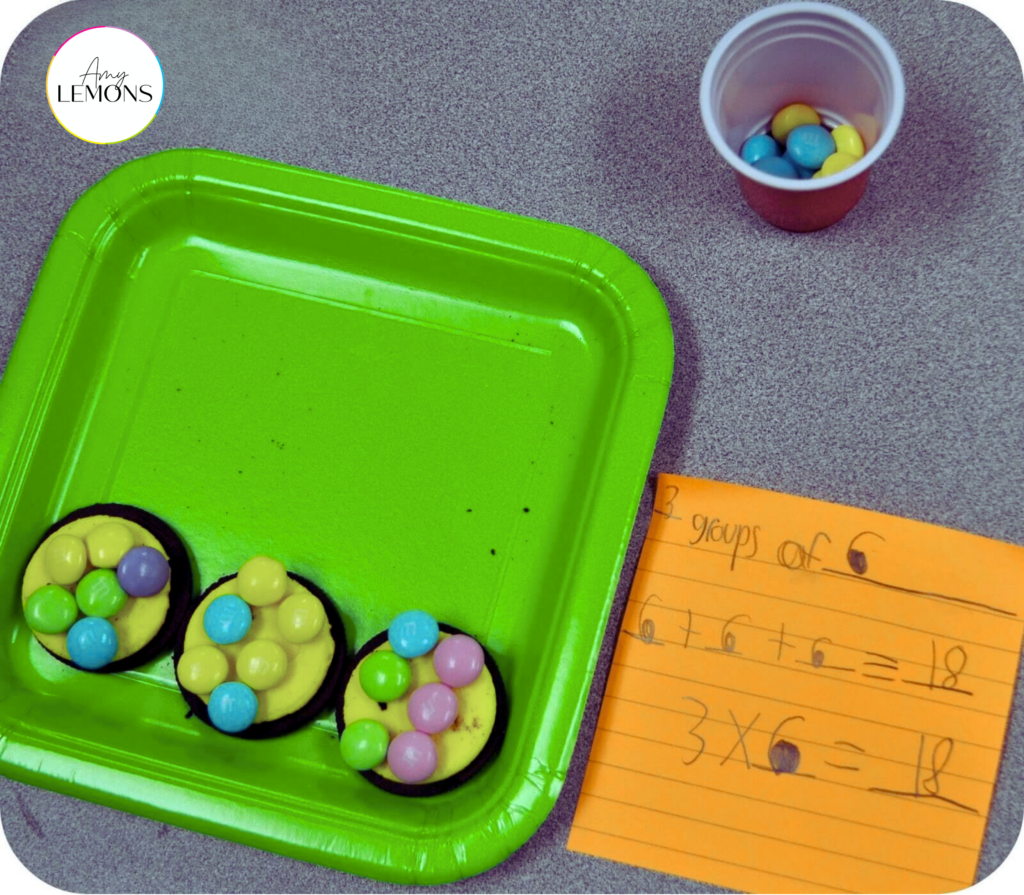
We walked through this process step-by-step together. At this stage, I keep everything very structured and supported because this is still brand new learning.
The excitement level was HIGH. There is just something about combining math and food that instantly boosts engagement.
Connecting Models to Equations
Once students are comfortable building equal groups and writing repeated addition, we begin connecting those models to multiplication equations.
This is where the learning really starts to click.
As we continue our bunny activity (and even during the Oreo activity), I introduce how multiplication is just a more efficient way to represent repeated addition.
For example:
- 3 + 3 + 3 + 3
becomes - 4 × 3
We talk about what each number represents:
- Number of groups
- Number in each group
Keeping this consistent language helps students build a strong conceptual understanding—not just memorize a procedure.
Tips for Teaching Multiplication in 2nd Grade
If you’re introducing multiplication, here are a few things that have made a big difference in my classroom:
- Start concrete: Use objects, drawings, and real-life scenarios
- Repeat the language: “groups of,” “equal groups,” and “repeated addition” should be heard constantly
- Keep it simple at first: Control one variable (like the number of groups) to reduce confusion
- Make it interactive: Let students build, roll, choose, and explain
- Delay the symbol: Focus on understanding before jumping into equations
Save This Activity for Later


One Response
Amy, this is great! Incorporating food to anything we teach makes kids get excited. Isn't that what learning is all about?