When looking for picture books to anchor lessons, I search for engaging stories with a strong emotional pull (whether that’s humor or inspiration), standout main characters, and a powerful message. Too Many Carrots is one of those stories that truly does it all.
This engaging read-aloud is filled with humor, a lovable (and slightly dramatic!) main character, and shares one of the most important classroom messages—sharing and friendship. It naturally lends itself to a rich comprehension-focused interactive read aloud lesson while also opening the door for cross-curricular connections.
Purposeful, ready-to-use lesson ideas combine comprehension skills, writing, and simple extension activities to transform this one picture book into a full learning experience. Students stay engaged from start to finish.
Affiliate links have been used in this post, but I only share items I use and enjoy!
Introducing the Book + Comprehension Focus
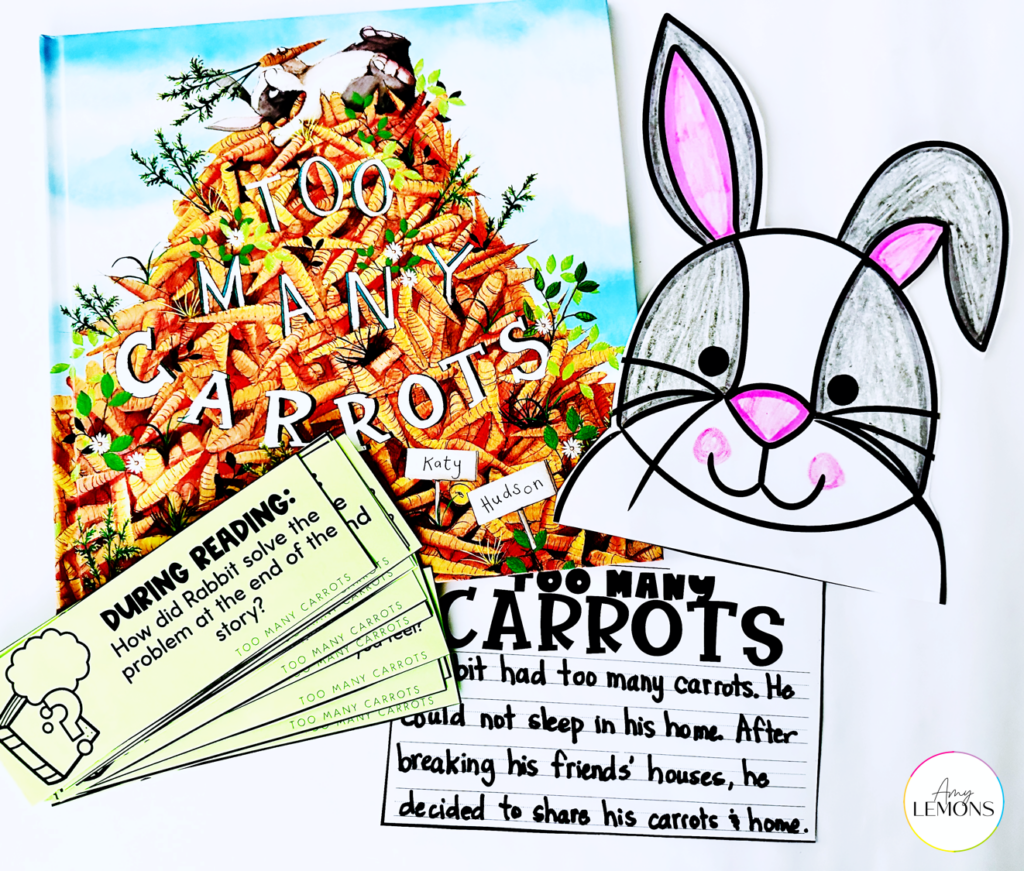
Too Many Carrots is the story of a rabbit who loves carrots… a little too much. As his obsession grows, so do his problems. His overflowing collection of carrots leads to one housing disaster after another, until he ultimately learns an important lesson about sharing and friendship.
This makes it the perfect mentor text for comprehension strategies like identifying character traits, character change, and learning a lesson.
During your interactive read-aloud, pause to ask questions that guide students to think about Rabbit’s choices:
Why does he keep collecting carrots?
What problems do his choices cause?
How does his thinking change by the end of the story?
Intentional questioning helps students move beyond surface-level understanding and into deeper comprehension while still enjoying a fun and lighthearted story.
Pre-Reading Journal: How Can We Share?
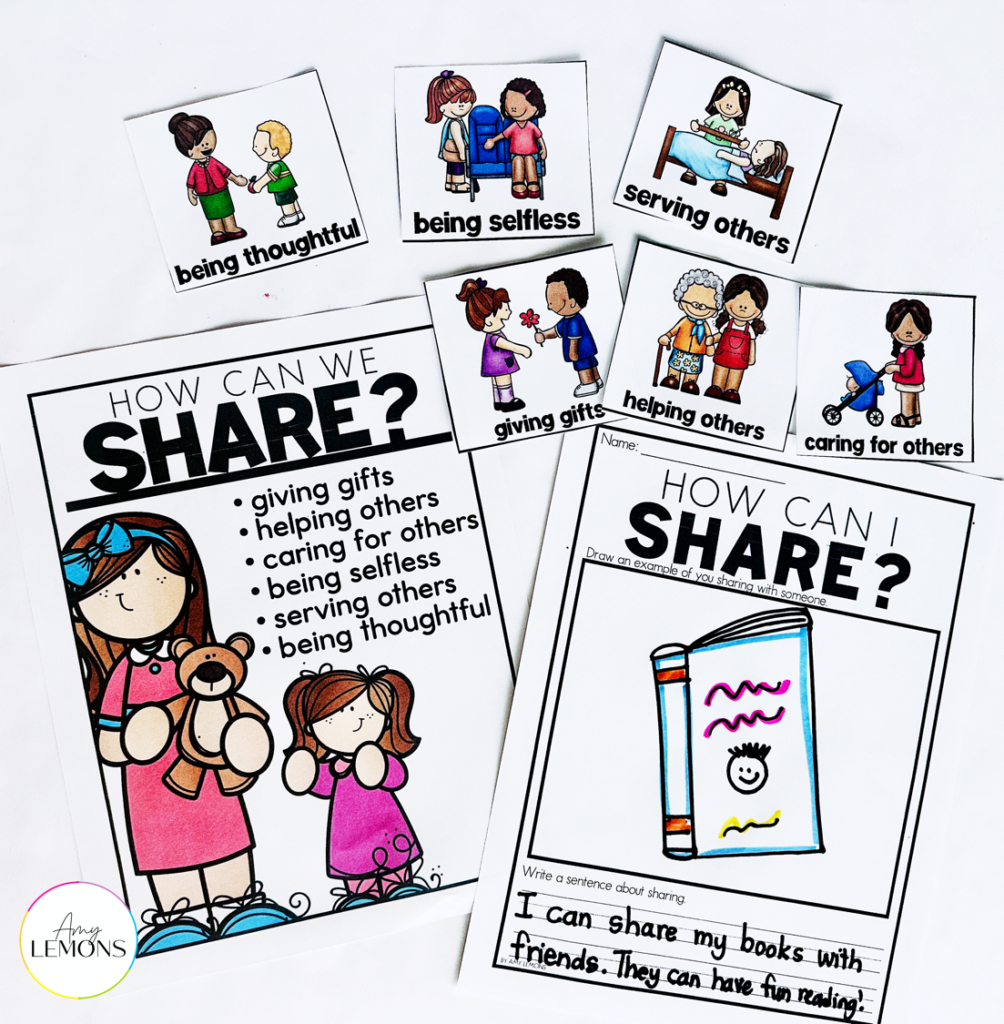
Before even opening the book, students begin by activating their background knowledge with a simple but powerful writing prompt: How can we share?
This pre-reading journal activity sets the stage for the story’s central message.
Students brainstorm and write about ways they can share with others, whether it’s toys, time, or kindness. This not only builds writing stamina but also creates a meaningful connection to Rabbit’s journey.
As you transition into the read-aloud, students are already thinking about sharing, which allows them to more easily recognize the lesson Rabbit needs to learn. It gives purpose to their listening and creates a strong anchor for discussion throughout the story.
Describe the Rabbit: A Character with Personality
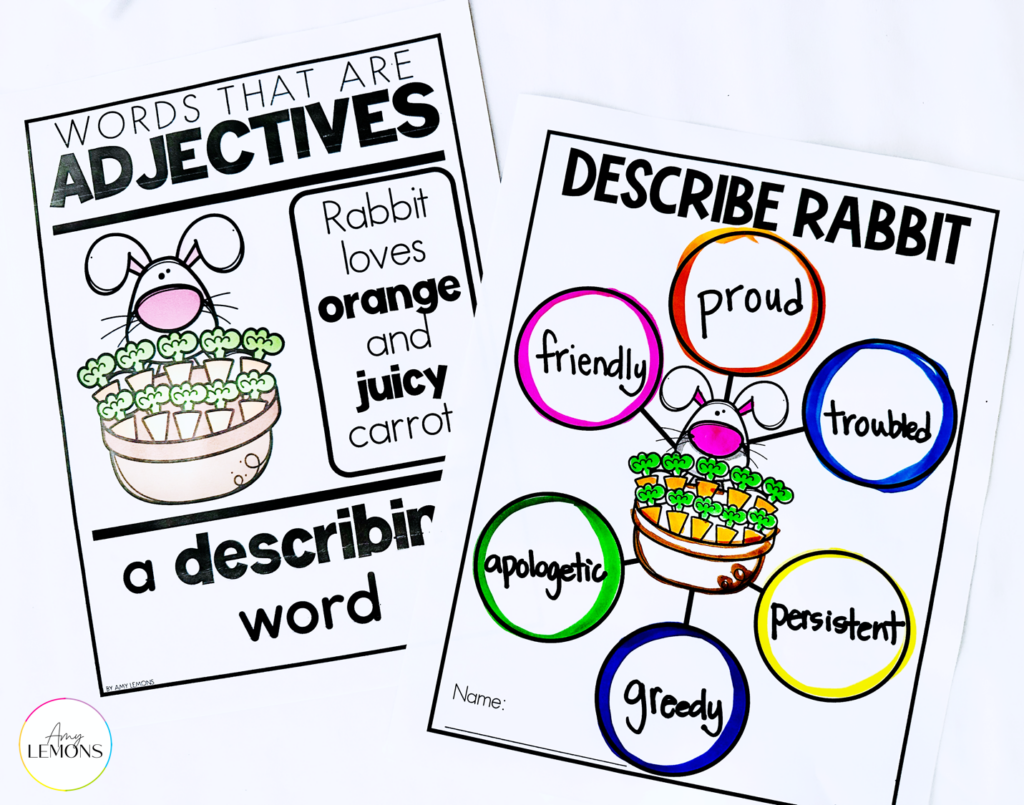
Rabbit is such a fun character to analyze because he is full of personality. He’s a little dramatic, a little silly, and very determined… especially when it comes to carrots. This makes him the perfect character for practicing descriptive language.
After reading, students can describe Rabbit using adjectives that reflect both his actions and his growth—greedy, persistent, troubled, and eventually apologetic or kind. Students see how characters change over time, understanding that they are not static but grow and learn, just like Rabbit does in the story.
Vocabulary and comprehension are strengthened by encouraging students to support their thinking with evidence from the text.
Sequencing Events: Retelling the Story
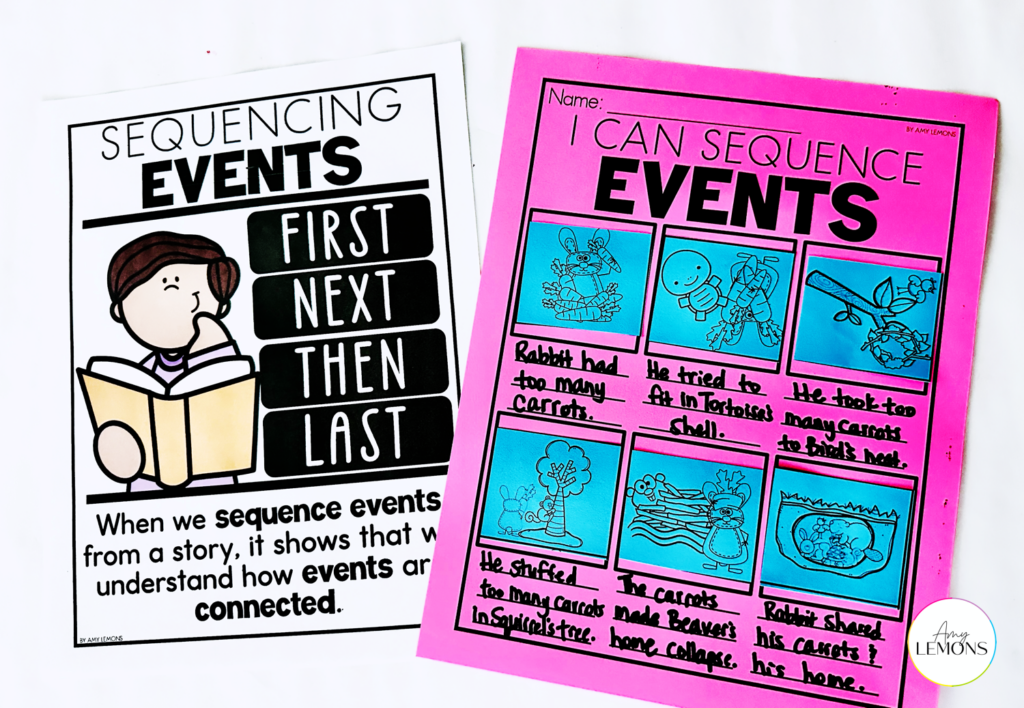
Sequencing is a key comprehension skill, and Too Many Carrots provides the perfect storyline for practicing it. Rabbit’s repeated attempts to store his carrots in different homes create clear, memorable events that students can easily retell.
Students work to put the story events in order using words like first, next, then, and last. After organizing the sequence, they write about each event, reinforcing both comprehension and writing skills.
This activity supports students in understanding how events are connected and how a story unfolds from beginning to end. It also gives them a structured way to retell the story, which is an essential skill for young readers.
Connecting to Nonfiction: Learning About Rabbits
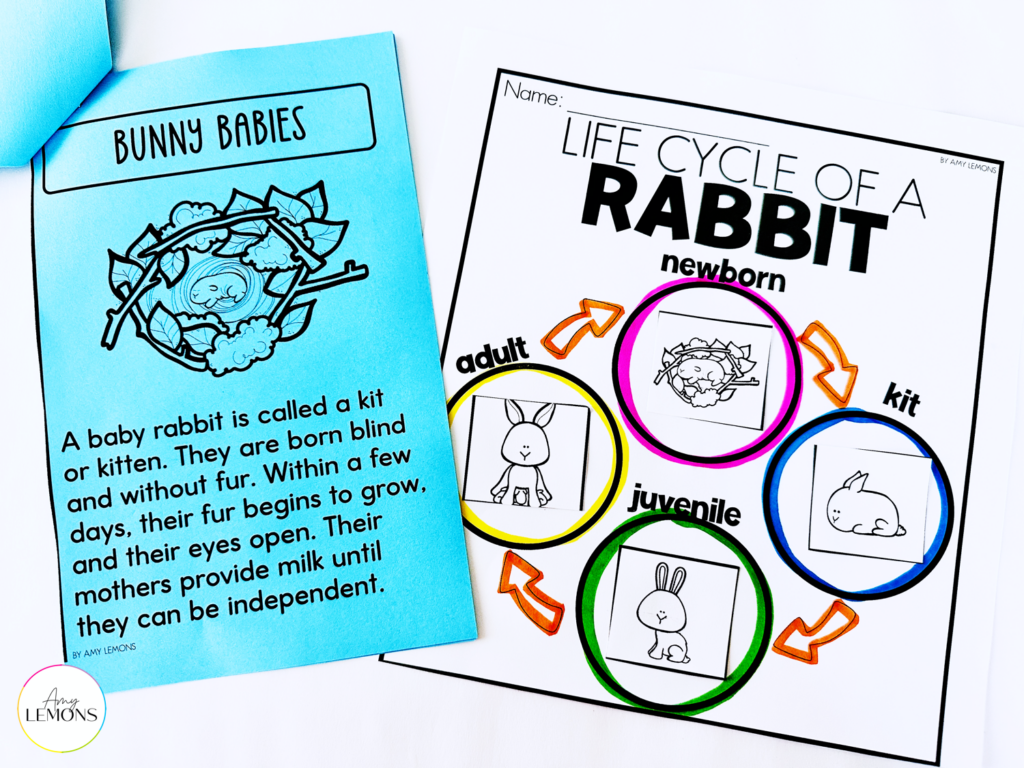
One of the best ways to extend a picture book lesson is by connecting it to nonfiction. After reading Too Many Carrots, students explore real-life information about rabbits through a simple nonfiction reader.
They learn about rabbit habitats, what rabbits eat, and even their life cycle from baby (kit) to adult. Students build background knowledge and make meaningful connections between fiction and nonfiction texts.
Fun stories paired with informational text, give students a more complete understanding of the topic. It also introduces important research and science concepts in a way that feels natural and engaging.
With Too Many Carrots as the foundation for an interactive read aloud lesson, you create a meaningful, engaging experience that helps students think deeply, make connections, and apply their learning in multiple ways. This is the beauty of a well-planned read-aloud… It’s not just a story, it’s an opportunity to build a classroom full of thoughtful, connected learners.
Looking for more rabbit themed learning activities? Check out a full list of rabbit books and activities!