If you have ever wondered whether a picture book read-aloud is “real” reading instruction, this post is for you.
Maybe your reading block feels packed with phonics, small groups, and leveled texts, and the read-aloud has become the thing you squeeze in after lunch.
Maybe you love reading to your students but aren’t sure how to turn that time into something that moves their comprehension forward.
Or maybe you are simply ready to try something new, something that gets your students talking, thinking, and connecting with books in a way worksheets alone never have.
Here is the good news: picture books are one of the most powerful comprehension tools you already have on your shelf. With a little intention, a single picture book read-aloud can teach vocabulary, character analysis, text evidence, and written response, all in a way that feels joyful for young readers.
That is the heart of Rooted in Reading. Each unit is built around a high-quality picture book and gives you everything you need to plan purposeful read-alouds, teach rich vocabulary, guide meaningful discussion, and help students respond to what they read.
Why Picture Books Belong in Your Reading Instruction
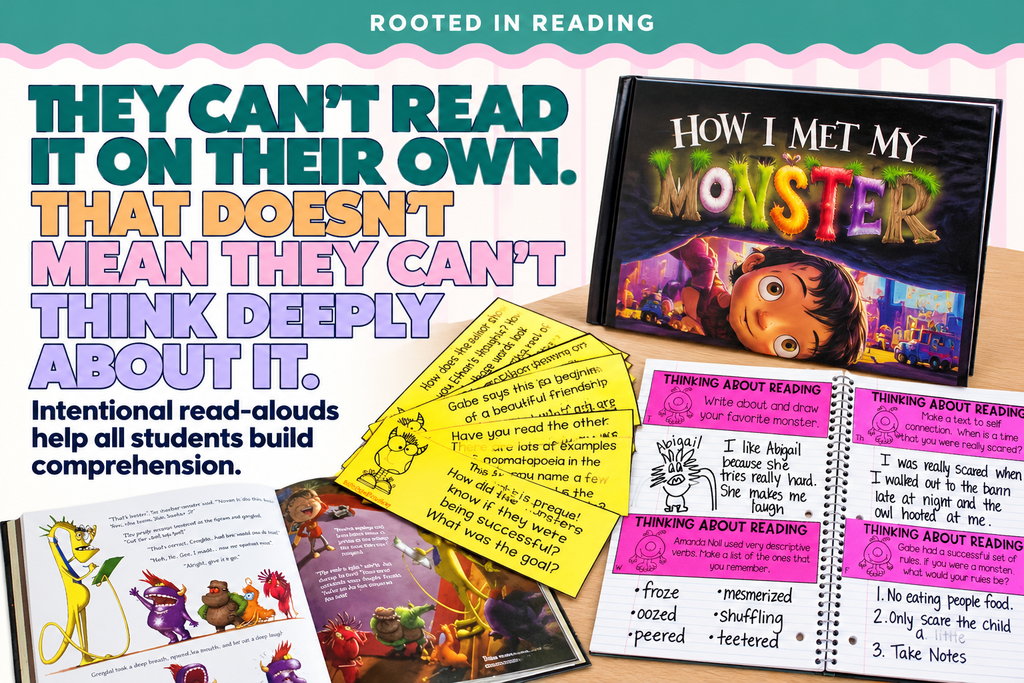
Many of our youngest readers can’t yet read a book like How I Met My Monster by Amanda Noll, illustrated by Howard McWilliam, on their own. The vocabulary is rich, the sentences are long, and the story has layers. But that doesn’t mean they can’t think deeply about it.
When you read aloud, you carry the work of decoding. That frees your students to spend all of their energy on comprehension: noticing how a character feels, predicting what will happen next, wondering why the author chose a certain word, and connecting the story to their own lives.
This matters for every learner in your room:
- Striving readers get access to grade-level ideas and vocabulary they can’t reach in their independent text yet.
- English learners hear fluent, expressive language and see it supported by the illustrations.
- Strong readers get stretched with higher-level questions, author’s craft, and deeper discussion.
Picture books are also short enough to finish in one sitting, which means students hold the whole story in their heads. That makes it easier to talk about big ideas like character change, cause and effect, and theme.
Step 1: Plan an Interactive Read-Aloud Before You Open the Book
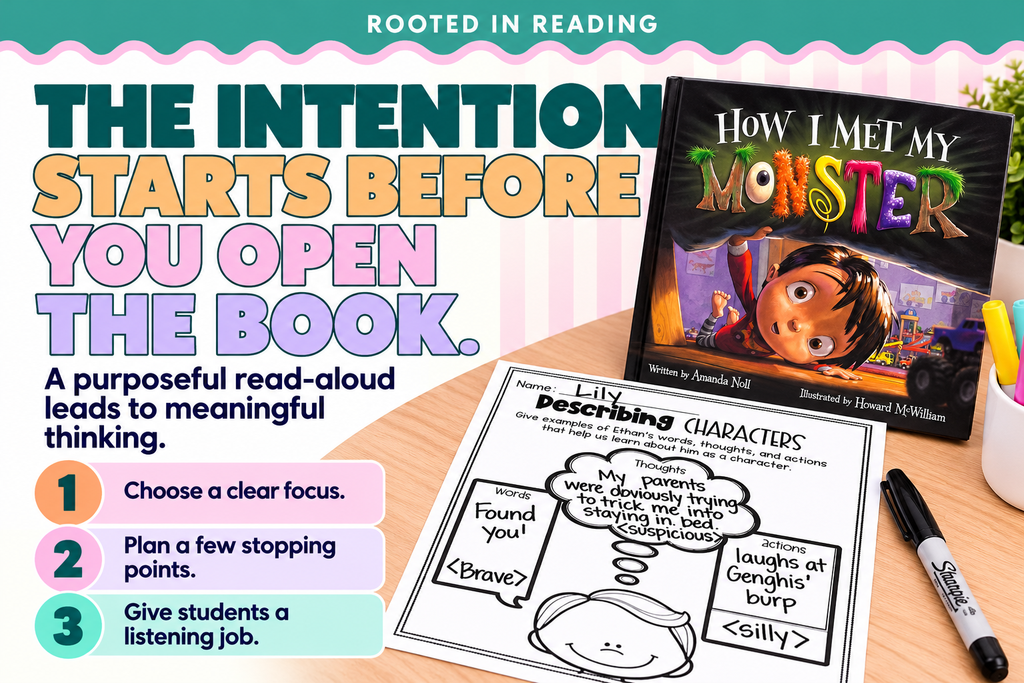
The difference between a read-aloud that entertains and an interactive read-aloud that teaches comes down to planning. The intention starts before you ever open the book. A purposeful read-aloud leads to meaningful thinking, and it only takes three simple decisions. Let’s use a reading unit on How I Met My Monster as an example to see how this is done.
1. Choose a clear focus
A rich picture book could teach a dozen skills. Pick one for the first read. Is today about describing characters? Making predictions? Noticing the author’s word choice? A single focus keeps your questions sharp and helps students know what to pay attention to.
For How I Met My Monster, a great first focus is describing characters. Ethan is brave, curious, a little suspicious, and very funny, and the author shows us all of that through his words, thoughts, and actions.
2. Plan a few stopping points
Before you read, flip through the book and mark three or four places to pause. Sticky notes work perfectly. Choose moments where a character makes a choice, shows a feeling, or where something surprising happens.
Resist the urge to stop on every page. Too many interruptions break the flow of the story and make it hard for students to stay engaged. A few well-placed stops lead to much richer conversation.
3. Give students a listening job
Before you start reading, tell students exactly what to listen for.
For example: “As I read, listen for things Ethan says, thinks, and does. Those clues will help us figure out what kind of character he is.”
A listening job turns passive listening into active thinking. Students tune in more closely because they have a purpose.
Step 2: Teach Read-Aloud Vocabulary With Intention
During a read-aloud, you read the words, but your students still do the thinking. Vocabulary is where that thinking begins. If students don’t understand the key words in a story, they can’t fully understand the story itself.
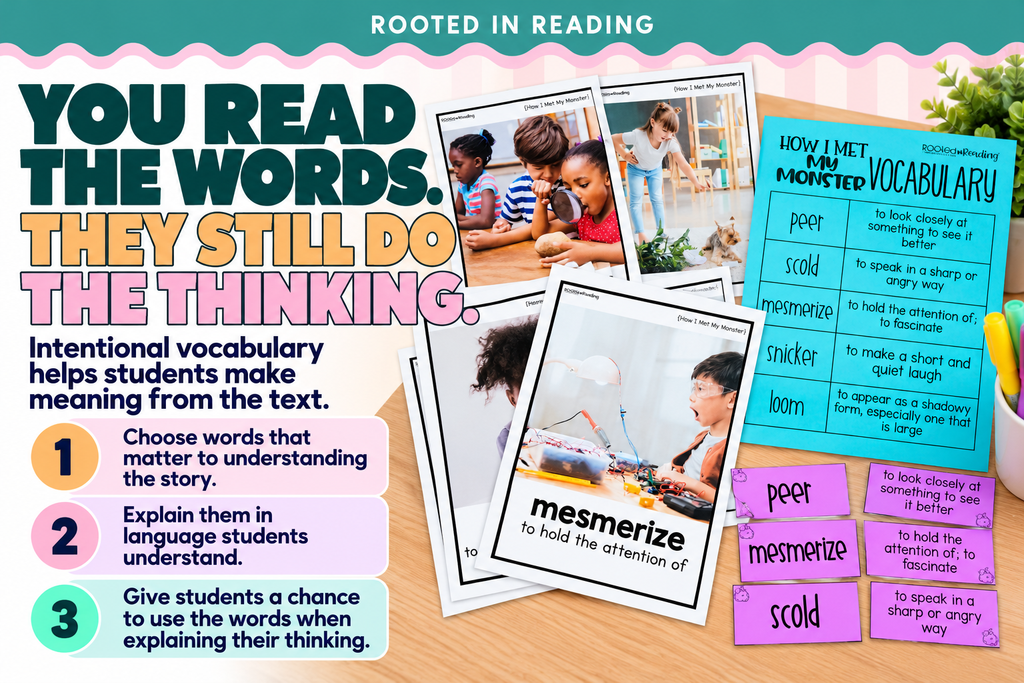
Picture books are full of sophisticated vocabulary that young students rarely meet in their decodable or leveled texts. Words like peer, scold, mesmerize, snicker, and loom all appear in How I Met My Monster. These are words students will see again and again as readers, and a read-aloud is the perfect place to introduce them.
Intentional vocabulary instruction helps students make meaning from the text. Here’s how to do it.
1. Choose words that matter to understanding the story
You don’t need to teach every unfamiliar word. Choose four to six words that are important to the story and useful beyond it.
Ask yourself: Will knowing this word help my students understand what’s happening? Will they see this word again in other books?
2. Explain them in language students understand
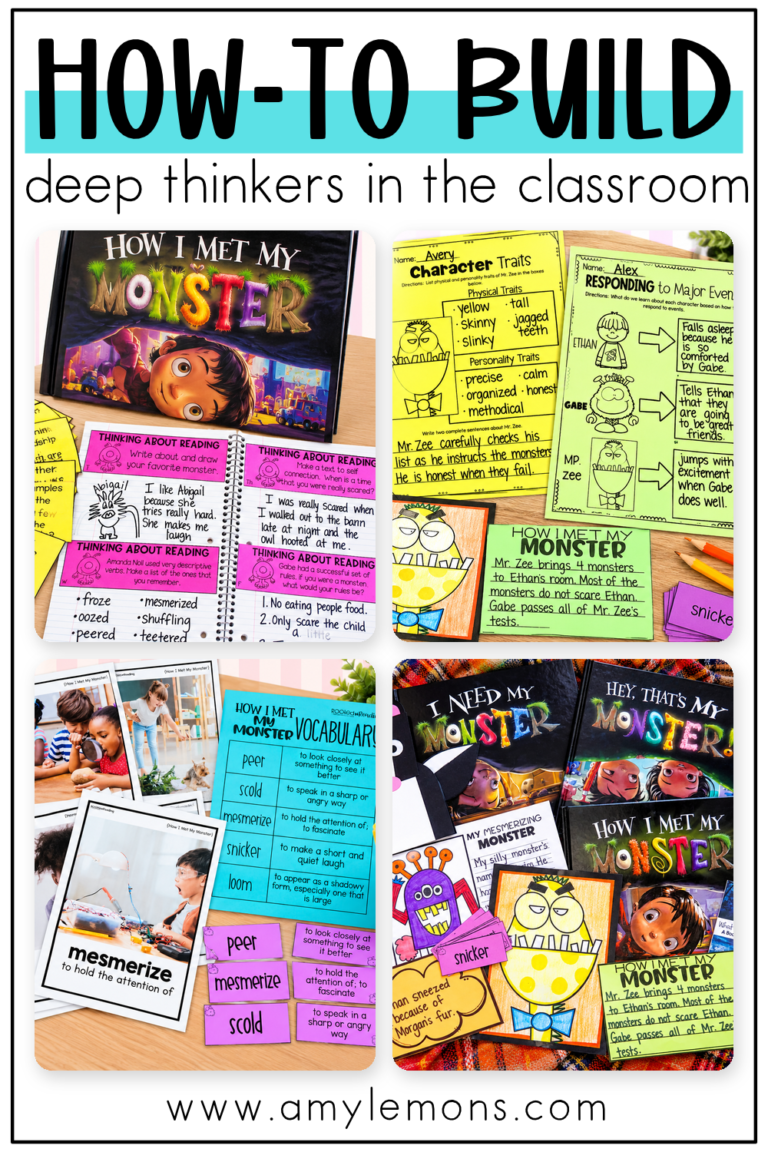
Dictionary definitions are often confusing for young learners. Use simple, kid-friendly definitions instead. Pair each word with a real photograph, like the vocabulary cards shown in the image. A picture of children peering through a magnifying glass makes the meaning of peer stick far better than a definition alone.
3. Give students a chance to use the words
Students own a new word when they use it, not just when they hear it. Display the words on an anchor chart, play a quick matching game with word and definition cards, and encourage students to use the new words when they explain their thinking.
When a student says, “Ethan peered under the bed to look for his monster,” you know the word has become part of their vocabulary.
Step 3: Take Students Back to the Text
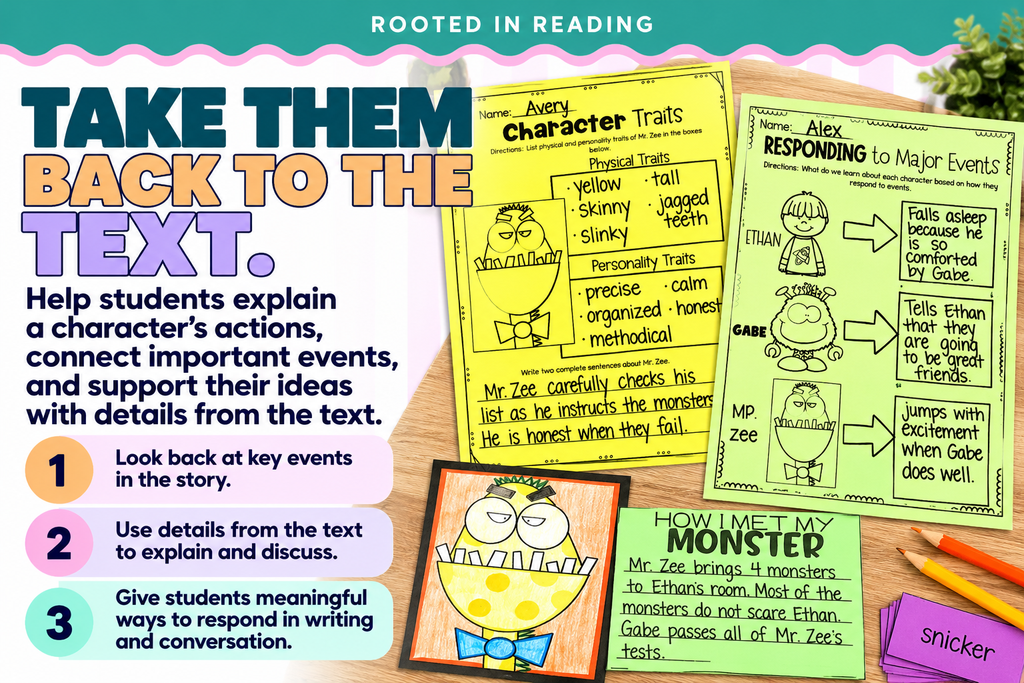
One of the most important comprehension skills we can teach is going back to the text to find evidence. It’s also one of the hardest for young readers. Picture books make it much more manageable, because the story is short and the illustrations give students a visual anchor to return to.
After the read-aloud, help students identify character traits, explain a character’s actions, connect important events, and support their ideas with details from the text.
1. Look back at key events in the story
Revisit the pages you marked during your first read. Ask questions that require students to think about why something happened, not just what happened. “Why do you think Ethan fell asleep at the end? What made him feel comfortable?”
2. Use details from the text to explain and discuss
Encourage students to point to the words or the pictures that support their thinking.
Sentence stems help: I think ___ because on this page ___. or The author shows us ___ when ___.
This is where students begin to understand that good readers don’t just share opinions. They back them up.
3. Give students meaningful ways to respond in writing and conversation
Written response gives every student a chance to show their thinking, including the quiet ones who don’t always share during discussion. The activities in the image show a few ways to do this:
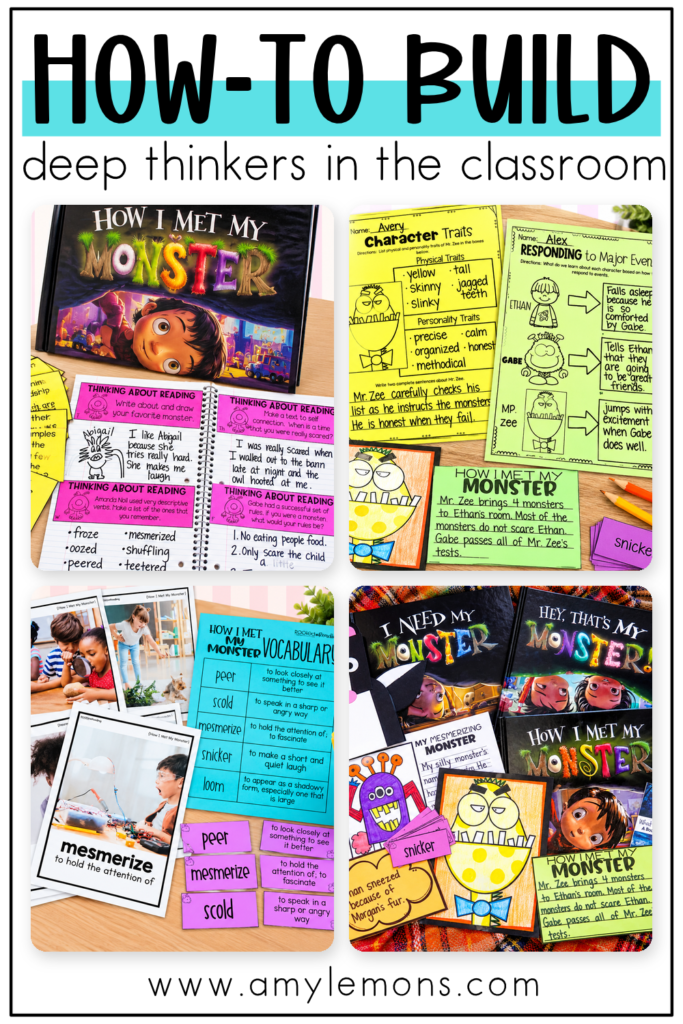
- Character Traits: Students list Mr. Zee’s physical traits (yellow, tall, skinny, jagged teeth) and personality traits (precise, organized, honest, calm, methodical). Then they write complete sentences using evidence, like “Mr. Zee carefully checks his list as he instructs the monsters. He is honest when they fail.”
- Responding to Major Events: Students explain what we learn about each character based on how they respond. Ethan falls asleep because he is comforted by Gabe. Gabe tells Ethan they are going to be great friends. Mr. Zee jumps with excitement when Gabe does well.
- Retelling: Students summarize the most important events: “Mr. Zee brings 4 monsters to Ethan’s room. Most of the monsters do not scare Ethan. Gabe passes all of Mr. Zee’s tests.”
- Character craft: A Mr. Zee craft lets students show what they know about his appearance and gives the finished writing a place to shine on a bulletin board.
Notice that every one of these responses is rooted in the text. Students aren’t guessing. They’re returning to the story to explain their thinking.
Step 4: Bring It All Together. Read. Discuss. Create.
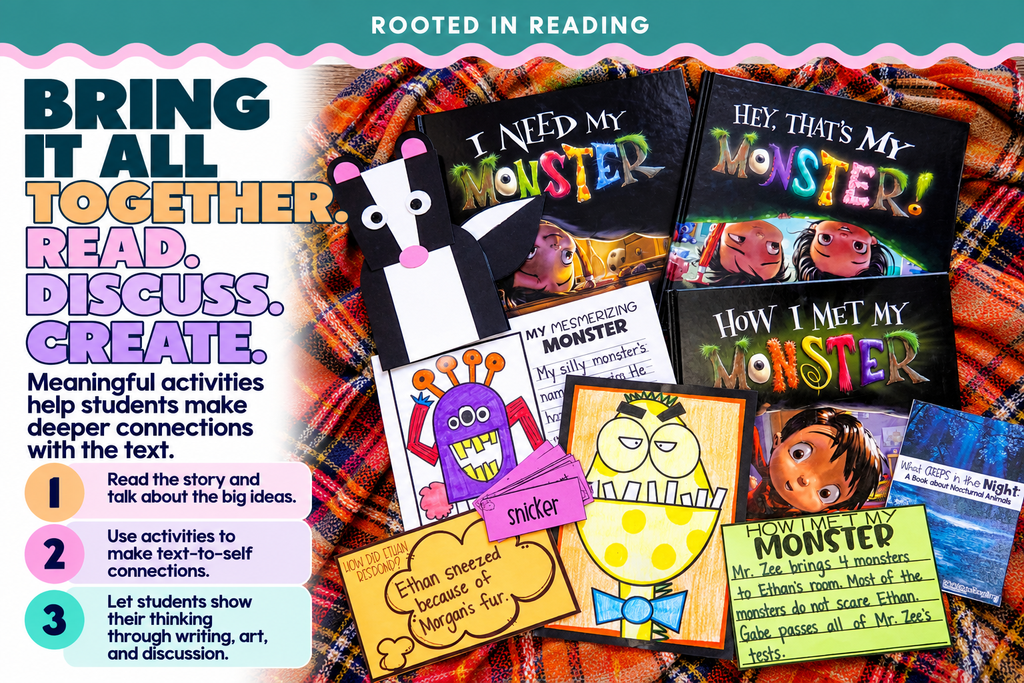
When you put purposeful planning, vocabulary, text evidence, and response together, something special happens. Students stop seeing the read-aloud as story time and start seeing themselves as readers who think, talk, and create.
Meaningful activities help students make deeper connections with the text. Here’s how to bring it all together.
1. Read the story and talk about the big ideas
After students understand the characters and events, zoom out. What is this story really about?
How I Met My Monster is about facing fears, friendship, and the idea that something that seems scary might turn out to be comforting. Big-idea conversations help students move from comprehension toward theme.
2. Use activities to make text-to-self connections
Young readers connect most deeply when they see themselves in a story. Ask students to think about a time they felt scared at night, or a time they made a new friend. These connections make the story personal and memorable.
3. Let students show their thinking through writing, art, and discussion
Not every student shows understanding the same way. Offering a mix of response options gives every learner a way in:
- Writing: On the “My Mesmerizing Monster” page, students design their own monster and describe it, using a vocabulary word from the unit right in the title.
- Cause and effect: A thought-bubble response asks, “How did Ethan respond?” and a student answers, “Ethan sneezed because of Morgan’s fur.”
- Art: A Mr. Zee craft brings a favorite character to life.
- Cross-curricular connections: A skunk craft and the nonfiction text What Creeps in the Night: A Book About Nocturnal Animals extend the nighttime theme into science.
Extend the learning with a series
How I Met My Monster is part of a series by Amanda Noll that also includes I Need My Monster and Hey, That’s My Monster! Reading books from the same series is a wonderful way to practice comparing characters, settings, and events across texts. Students already know the world of the story, so they can focus their energy on deeper thinking.
Ready to Try It in Your Classroom?
Picture books aren’t a break from reading instruction. Used with intention, they’re one of the best ways to help young readers think deeply, connect with the text, and respond to what they read.
If you’d like to bring this kind of learning into your classroom without spending your evenings planning, Rooted in Reading has you covered.
The How I Met My Monster Rooted in Reading unit includes the vocabulary cards, discussion questions, response pages, and crafts you saw in this post, all ready to print and teach.
Want a whole year of interactive read-alouds? Browse all the Rooted in Reading picture book units and find your students’ next favorite book.
Frequently Asked Questions About Picture Book Read-Alouds
What is an interactive read-aloud?
An interactive read-aloud is a planned read-aloud where you pause at a few key moments to ask questions, talk about the story, and get students thinking while you read.
Are picture books too easy for second and third graders?
Not at all. Many picture books are written at a reading level well above what students can read independently, and they’re full of rich vocabulary, author’s craft, and layered themes. The thinking you ask students to do is what makes a picture book rigorous.
How long should an interactive read-aloud take?
Plan for about 15 to 20 minutes for the first read, including three or four short stopping points. Vocabulary, discussion, and written response can happen across the following days, so one book can anchor a full week of reading instruction.
How many times should I read the same picture book?
Rereading is powerful. The first read lets students enjoy the story. Later reads let you zoom in on vocabulary, characters, or author’s craft. Students notice more each time, and their responses become more thoughtful.
How do I choose a good picture book for reading instruction?
Look for a book with a strong story, interesting characters, rich vocabulary, and illustrations that add meaning. Most importantly, choose a book your students will love. Engagement opens the door to deep thinking.